
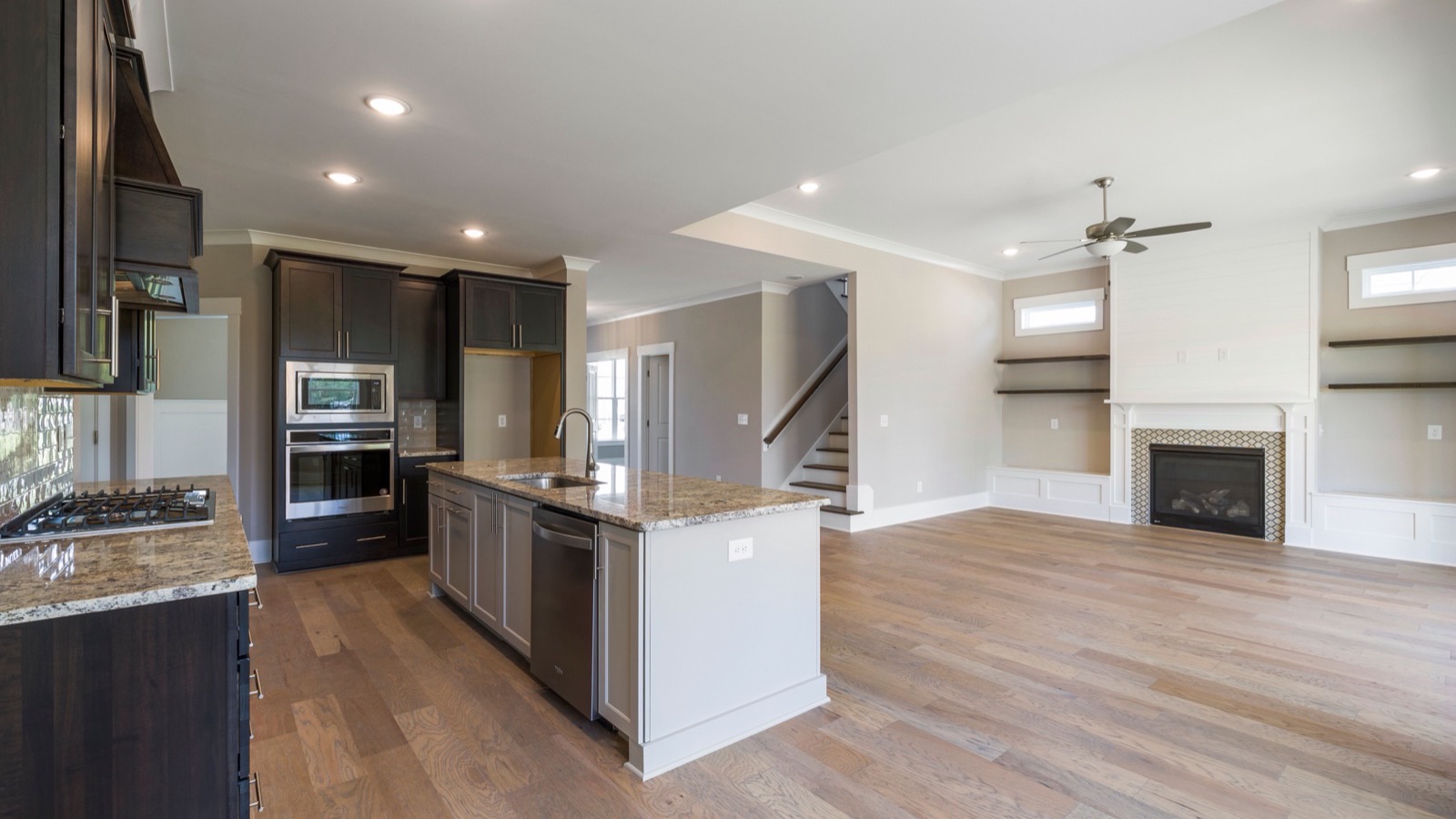
Fast Answer: Best DIY Multi Zone Ceiling Cassette in 2026
Zone Air is the best DIY multi zone ceiling cassette mini split for most homeowners in 2026. MrCool and Zone Air are the two main brands offering true DIY multi zone ceiling cassette systems with pre charged line sets and quick connect fittings, but Zone Air wins on three fronts: smarter pre charged line set design, a warranty written for homeowner installation, and 4-way cassette airflow.
The core reasons Zone Air leads:
- Custom pre charged line set lengths from 16 to 75 ft per zone. No decoiling excess copper, no oil pooling in low spots, and no connecting two line sets together with couplers.
- 4-way ceiling cassette airflow that distributes conditioned air in all four directions, compared to the one-way throw of MrCool's OuttaSight cassette.
- Warranty support that does not void coverage for DIY install. Zone Air provides a 7-year compressor and 5-year parts warranty with US-based live technical support.
- Heating operation down to −13°F, covering cold winters across most of the country.
- Quiet indoor units listed at 28 to 42 dB per cassette on Zone Air's multi zone systems, depending on fan speed.
Zone Air's ceiling cassette systems reach 24 SEER2 in 3-zone configurations (21 SEER2 on single and dual zone), and every system provides both heating and cooling from one outdoor unit.
| Category | Best pick |
|---|---|
| DIY multi zone ceiling cassette | Zone Air |
| Single zone wall mount (lowest sticker price) | MrCool Easy Pro |
| Pro-install premium | Mitsubishi, Fujitsu, Daikin |
The rest of this article compares MrCool DIY 5th Generation multi zone kits to Zone Air's multi zone ceiling cassette systems and walks through how to choose the right system for your home. For a single-zone cassette comparison, see our best DIY ceiling cassette mini split guide.
What Counts as a True DIY Multi Zone Ceiling Cassette Mini Split?
A true DIY mini split system keeps the refrigerant circuit sealed from factory to installation. The homeowner never handles refrigerant charging, never uses vacuum pumps or manifold gauges, and never needs EPA Section 608 certification. The install requires only basic hand tools, some electrical work, and carpentry for mounting.
The indoor and outdoor components of a ceiling cassette system include:
- Outdoor unit: an inverter-driven heat pump condenser (one outdoor condenser powers multiple zones)
- Indoor unit: a ceiling cassette air handler recessed into the ceiling framing
- Pre charged line sets: factory-sealed copper lines connecting each indoor air handler to the outdoor condenser
- Control cable and condensate drain: wiring for power and communication, and a gravity or pump-driven drain for moisture
What makes a ceiling cassette different from wall units? Ceiling cassettes mount flush into the ceiling and need roughly 10 inches of ceiling cavity depth (Zone Air's cassette body is 9-5/8 inches tall). A four-way cassette distributes air in every direction instead of one-directional flow. Cassettes eliminate the need for ductwork and bulky wall handlers, and they free up wall space entirely. Framing fit differs by brand: MrCool's one-way OuttaSight is built to fit between standard 16-inch ceiling joists, while Zone Air's four-way cassette body is 22-1/2 inches square and needs a framed opening.
Most ceiling cassette systems from other mini split brands are not DIY. In our view, Pioneer's standard flare-type line sets, which call for a vacuum pump, put it outside true DIY. Senville's warranty terms state that "DIY installation will void your warranty coverage." Mitsubishi and Fujitsu use flared or brazed tubing and are sold through licensed HVAC contractors. In 2026, Zone Air and MrCool DIY 5th Generation are the two brands offering multi zone ceiling cassette systems built for homeowner installation with pre charged quick connect fittings. Pre charged line sets eliminate the need for vacuum pumps, and installation requires no specialized tools or training beyond what most handy homeowners already have. (Our guide to DIY quick connect pre charged line sets explains how the fittings work.)
Zone Air vs MrCool DIY 5th Generation: 2026 Head-to-Head
This is the comparison buyers are searching for. Both brands use R-454B refrigerant and pre charged technology in their 2026 DIY systems. Both avoid the need for specialized HVAC equipment. But the similarities end at the refrigerant.
Here is where they differ:
| Feature | Zone Air | MrCool DIY 5th Gen |
|---|---|---|
| Line set lengths | Custom: 16–75 ft per zone, one continuous run | Fixed: 16, 25, 35, or 50 ft; couplers needed for longer runs |
| Cassette airflow | 4-way (all directions) | One-way (OuttaSight) |
| Ceiling framing | 22-1/2" square body, framed opening | Fits between 16" joists |
| Zones per condenser | 2 or 3 | Up to 6 |
| Head types on one condenser | Wall, cassette, concealed ducted | Wall, cassette |
| SEER2 (cassette systems) | 21 (single/dual zone), 24 (3-zone) | 23.5 (single-zone 12K), 21.8–23 (multi zone) |
| Warranty (DIY install) | 7-yr compressor / 5-yr parts; DIY does not void | 7-yr compressor / 5-yr parts; no registration required |
| Cold-climate heating | Rated to −13°F | About −13°F (standard multi zone); −22°F (single-zone 12K Hyper Heat cassette) |
| App control | Yes | Yes, via MrCool's SmartHVAC app (remote control and scheduling) |
| Origin | Final assembly, testing, and inspection in the USA | Designed in the USA, manufactured overseas |
MrCool DIY multi zone ceiling cassette systems provide discreet climate control through the OuttaSight design, which ensures a low-profile recessed installation. MrCool's Trustpilot profile sits at 3.2 out of 5 from 89 reviews (47% one-star) as of September 15, 2026, with reviewers describing warranty claim denials, support delays, and waits for replacement parts. Zone Air's product pages show a 4.8 out of 5 average across 157 published customer reviews, and its support comes straight from the company, with final assembly, testing, and inspection in the USA.
Why Zone Air's Multi Zone Ceiling Cassette Systems Are Best in 2026
Zone Air designs multi zone ceiling cassette systems specifically for DIY installers. The system architecture starts with the line sets, which is where most DIY mini split problems originate.
Custom pre charged line sets, sized per zone. When you order a Zone Air system, you select the exact line set length for each indoor unit. If your master bedroom cassette needs a 23-ft run and your living room cassette needs a 40-ft run, each line set ships cut and pre charged to those lengths. There is no excess copper to coil on the ground or stuff into an attic corner.
No couplers, fewer leak points. Zone Air multi zone systems never require connecting two pre charged line sets together. Each zone uses one continuous run from the indoor air handler to the outdoor condenser. MrCool DIY multi zone setups, by contrast, require coupler kits when a run exceeds the longest 50 ft line set. Every additional coupler is another potential leak point.
No oil pooling. When excess line set is coiled or sagging in a low spot, compressor oil carried in the refrigerant can settle there. Over time that can reduce oil return to the compressor and cut efficiency. Zone Air's custom pre charged lines route directly from point A to point B with no unnecessary loops, which helps keep oil circulating back to the compressor where it belongs.
4-way ceiling cassette airflow. Each Zone Air ceiling cassette pushes conditioned air in all four directions from the ceiling, with motorized louvers. In an open-concept kitchen, living, and dining area, this washes air across the full space instead of blowing it in one direction.
A drop-down panel on Zone Air cassettes simplifies filter access and cleaning, and a condensate pump is built into each cassette. Zone Air's 3-zone ceiling cassette systems are rated 24 SEER2 and 10.5 HSPF2 (Region IV), with indoor sound levels listed at 28 to 42 dB. Each Zone Air multi zone condenser supports two or three indoor units, and each indoor unit can be sized for a different room.
Where MrCool DIY 5th Generation Still Fits (and Where It Falls Short)
MrCool's DIY 5th Generation lineup covers single zone kits from 9,000 to 36,000 BTU. For a homeowner who wants a single zone wall mounted air handler in a garage or bonus room with a run under 50 ft, a MrCool DIY system can work.
MrCool's ceiling cassette and multi zone packages use the same pre charged, quick-connect approach. MrCool's DIY systems can be installed in 4 to 6 hours for a single zone wall mount. The OuttaSight cassette is available as 6K, 9K, 12K, and 18K heads and pairs with multi zone condensers that also accept wall mounted units on the same system, up to the six-zone 55K condenser. Because the one-way OuttaSight fits between 16-inch joists, it is the easier cassette to drop into an existing ceiling bay.
The trade-offs in 2026 are real:
- Fixed line set lengths force homeowners to buy coupler kits for any run longer than 50 ft, or coil the excess on runs that fall between sizes. That means extra connections, extra leak risk, and extra time during install.
- Fewer head types on one condenser. MrCool DIY multi zone pairs wall and cassette heads; there is no concealed ducted head in the DIY line.
- Warranty and support experiences vary. MrCool's standard 5-year parts and 7-year compressor warranty requires no registration, but its Trustpilot rating is 3.2 out of 5 (September 15, 2026), with reviewers citing warranty claim denials and waits for replacement parts.
- One-way cassette airflow throws air from one side of the grille, so in wide open rooms the placement of the cassette matters more than it does with a four-way unit.
MrCool remains a viable option for simple projects. But for multi zone ceiling cassette installations in multiple rooms, Zone Air's design reduces the number of things that can go wrong.
Key Design Difference: Custom Pre Charged Line Sets vs Coupled Line Sets
The way a brand handles line set lengths is one of the most consequential differences between DIY systems, and one of the least discussed.
Zone Air lets you select exact pre charged line set lengths per indoor unit. You measure each run from the ceiling cassette to the outdoor unit, pick the length in whole feet (cassette line sets span 16 to 75 ft), and the line set arrives factory-sealed with the correct R-454B charge. One continuous copper run per zone, two connections total: one at the indoor unit, one at the outdoor unit.
MrCool's DIY 5th Generation multi zone designs work differently. Line sets come in fixed lengths of 16, 25, 35, or 50 ft. If your run measures 60 ft, you purchase two line sets and join them with a coupler kit. That adds a third and fourth connection point per zone, plus the mechanical risk of an improperly torqued fitting.
Oil pooling is the hidden cost of excess line. When a homeowner coils 15 ft of leftover line set behind the outdoor unit or lets it sag in an attic bay, compressor oil can collect in those low spots and return to the compressor more slowly. Zone Air's custom pre charged lines avoid this problem by routing only the copper you need, with no surplus to coil or sag.
For multi zone layouts running through attics, crawl spaces, and tight framing cavities, fewer connections and zero excess line translate directly into fewer failure points.
4-Way Ceiling Cassette Airflow vs 1-Way Designs
Homeowners choose ceiling cassette units over wall units for two reasons: the flush, low-profile look and better air mixing in large rooms. A wall mounted air handler blows air in one direction from a wall. A ceiling cassette sits closer to the center of a room and can distribute air outward.
Zone Air's ceiling cassettes push conditioned air across the ceiling in all four directions. In a 20 × 25 ft open-concept living area, this means conditioned air reaches every corner without relying on a single throw direction. Four-way ceiling cassette units are ideal for large rooms and open layouts where a single wall unit can leave uneven temperatures.
MrCool's OuttaSight cassettes are one-way flow. Air exits the grille in one direction. In smaller or narrow rooms, this can be adequate, and the one-way design is what lets the unit fit between 16-inch joists. In wider rooms, where you put the cassette and which way it throws matter more.
Best uses for 4-way cassettes vs wall units:
- Open-concept living/kitchen/dining: 4-way ceiling cassette
- Master bedroom with high ceiling height: 4-way ceiling cassette
- Small home office or bonus rooms: wall mounted unit or 1-way cassette
- Garage or workshop: wall mounted unit
At low fan speeds, Zone Air's ceiling cassettes are listed at 28 to 30 dB, about the level of a whisper. This makes them practical for bedrooms and offices where noise matters. Ceiling cassettes can be installed without professional HVAC tools, though overhead work does require a helper.
Sizing and Zoning: Getting Your Multi Zone Layout Right
The basic sizing rule for mini splits: plan for 18 to 22 BTU per square foot in rooms with average insulation and 8 to 9 ft ceilings. Adjust upward for large windows, poor insulation, ceiling height above 10 ft, or sun-facing exposures. Use a Manual J calculation for precision.
A single zone system pairs one outdoor condenser with one indoor unit. A multi zone system connects one outdoor unit to two or more indoor units: Zone Air condensers take two or three, and MrCool's largest DIY condenser takes up to six. Multi zone options allow independent comfort control across different rooms; each zone runs its own temperature setting and fan speed. (Our best DIY multi zone mini split guide covers wall-mount layouts too.)
Zone Air's multi zone systems allow mixing ceiling cassette, wall mounted, and concealed ducted indoor units on the same condenser. You could run two ceiling cassettes in your living area and master bedroom, plus a wall mounted air handler in a guest room, all from one outdoor condenser. Mixing indoor unit types lets you match each room's style and needs.
A properly sized multi zone system can heat and cool much of a home. Multi zone configurations can reduce total capacity needs because not every zone runs at peak load simultaneously. When mapping your home into zones, think about it this way:
- Measure square footage per room
- Note ceiling height, window area, and insulation quality
- Assign a BTU target per room (room size × 18–22 BTU/sq ft)
- Sum zone BTUs and match to an outdoor condenser that accepts that connected total
- Select indoor unit style per room: ceiling cassette for open areas, wall mount for smaller rooms
Zone Air's 3-zone 36,000 BTU ceiling cassette system connects three 12K ceiling cassette air handlers to one outdoor condenser with a rated cooling capacity of 27,000 BTU (it accepts up to 36,000 BTU of connected indoor capacity). The connected load exceeds the outdoor rating because mini split inverter compressors modulate output to match real-time demand, and rooms rarely peak at the same time.
Installation Experience: Zone Air vs MrCool DIY
The major steps of a ceiling cassette DIY install are the same regardless of brand:
- Plan line set routes and condensate drainage
- Cut the ceiling opening, verify joist spacing, and frame the opening if the cassette is wider than the bay
- Mount the ceiling cassette air handler to the framing (with support brackets or hanger rods)
- Route pre charged lines through walls, attic, or crawlspace
- Connect quick connect fittings at indoor and outdoor components
- Run control wiring and power (dedicated circuit with disconnect)
- Connect condensate drain (gravity or pump)
- Open the service valves as the manual directs, then start up and test each zone
Installation typically takes 4 to 6 hours for a single ceiling cassette with a helper. MrCool's DIY systems can be installed in 4 to 6 hours for a single zone as well. Multi zone adds roughly 2 to 3 hours per additional head.
Where the two brands diverge: with Zone Air's custom pre charged lengths, you pull exactly the copper you ordered through the attic, connect once at each end, and move on. No couplers, no extra coil to hide. With MrCool DIY 5th Generation multi zone installs, you may need to coil excess line, join two line sets together with a coupler, and carefully torque each fitting. On the ceiling side, MrCool's one-way cassette is the simpler fit in a 16-inch bay, while Zone Air's four-way cassette needs a framed opening.
Both pre charged systems avoid vacuum pumps and refrigerant charging entirely. But Zone Air's simpler plumbing means fewer connection points during install. Zone Air systems can be installed without HVAC certification, and DIY mini split installation can save homeowners $3,000 to $5,000 compared to professional installation of a comparable ductless mini split system. Electrical work (breaker panel, disconnect box) may still require a licensed electrician depending on local codes.
Performance, Efficiency, and Hyper Heat Options
The key performance metrics for any mini split system in 2026 are SEER2 for cooling efficiency, HSPF2 for heating efficiency, and minimum operating temperature for all season comfort in colder climates. SEER2 and HSPF2 replaced the older SEER and HSPF test procedures in 2023 and use more realistic test conditions.
Both Zone Air and MrCool 5th Generation use R-454B refrigerant, a lower-GWP replacement for R-410A, which is being phased down. Zone Air ceiling cassette systems are rated 21 SEER2 and 10.0 HSPF2 in single and dual zone configurations, and 24 SEER2 and 10.5 HSPF2 in 3-zone configurations. Zone Air cassettes heat down to −13°F outdoors, making them suitable for many U.S. climates without backup heat.
MrCool's DIY 5th Gen cassette specs are competitive on paper. Its single-zone 12K cassette system pairs with a Hyper Heat condenser rated 23.5 SEER2 and heating down to −22°F, the deeper cold rating of the two brands for a single room. Its multi zone cassette pairings run 21.8 to 23 SEER2, and the standard multi zone condensers operate to about −13°F, the same floor as Zone Air.
Upgrading from an older, low-SEER system to a high-SEER2 mini split can meaningfully lower cooling costs. Note that the federal 25C heat pump tax credit ended for equipment placed in service after December 31, 2025, so check state, utility, and HEAR rebate programs for 2026 incentives instead. Compared to window units or aging central AC, a DIY ceiling cassette system pays back through lower bills and any rebates you qualify for.
Cost Comparison: Equipment, DIY Savings, and When Pros Still Make Sense
Zone Air's 2026 pricing for ceiling cassette systems:
- Single zone 12K ceiling cassette: $2,569.99
- Dual zone 24K (12K + 12K) ceiling cassette: $4,039.99
- 3-zone 36K (12K + 12K + 12K) ceiling cassette: $4,909.99
Line sets are sold separately, from $229.99 per zone up to 16 ft ($329.99 at 25 ft). A Zone Air dual zone cassette system with two 25 ft line sets comes to $4,699.97, versus $5,886 on sale for MrCool's 2-zone 9K + 12K cassette system when we checked on September 15, 2026. MrCool's single-zone 12K Hyper Heat cassette system with a 25 ft line set was $3,283 on sale, versus $2,899.98 for Zone Air's 12K cassette with a 25 ft line set. MrCool multi zone builds with runs over 50 ft also add coupler kits and extra line sets.
DIY installation with pre charged lines from either brand saves 30 to 60 percent versus a pro-installed ceiling cassette system from Mitsubishi or Fujitsu. Zone Air offers competitive pricing when you factor in included condensate pumps, custom line sets, and the elimination of coupler kits.
Total project cost still includes:
- Electrical work (dedicated circuit, disconnect box, possibly an electrician)
- Ceiling framing, finishing, and drywall repair around the cassette opening
- Condensate line routing (Zone Air cassettes include a pump)
- Building permits where required
- Optional accessories like wall controllers or line set covers
Professional installation still makes sense for very large custom homes, commercial spaces with 4+ zones of ducted return air, or jurisdictions that require a licensed HVAC technician for any refrigerant-adjacent work, even on sealed pre charged systems. But for a 2- or 3-zone residential project, DIY with Zone Air is the most cost-effective path to climate control across multiple rooms.
How to Choose Between Zone Air, MrCool, and Other Mini Split Brands
The decision comes down to four questions:
- DIY or professional installation? If you want a DIY multi zone ceiling cassette, your options in 2026 are Zone Air and MrCool. Both are pre charged systems specifically designed for homeowner installation.
- Single zone or multi zone? For multi zone systems, Zone Air's custom line sets and 4-way cassettes are the safer bet. For a simple single zone wall mount, MrCool's Easy Pro has a low sticker price, and Zone Air's 115V wall mounts skip the 230V circuit (see our 115V DIY mini split guide).
- Ceiling cassette or wall mount? Ceiling cassettes suit open layouts, high ceilings, and rooms where wall space is limited. Wall units work for smaller rooms, garages, and bonus rooms. Zone Air supports mixing both, plus concealed ducted heads, on one outdoor unit.
- Climate? Both brands' standard multi zone systems heat to about −13°F. If a single room needs deep-cold heating to −22°F, MrCool's single-zone Hyper Heat cassette carries the lower rating. In mild and mixed climates, both work fine.
Other mini split brands like Mitsubishi, Fujitsu, and Daikin remain excellent choices for homeowners with larger budgets who prefer to outsource all work. These brands deliver long track records and broad parts availability, but they require professional installation with brazing or flaring, vacuuming, and licensed technicians. They are not the right fit for DIY.
For the safest, cleanest DIY path to multi zone ceiling cassettes in 2026, start by measuring your line set runs, mapping your zones by room size and square footage, and building your layout around a Zone Air pre charged ceiling cassette system. It is the right system for homeowners who want to handle the install themselves without sacrificing airflow quality, efficiency, or long-term reliability. Evolving building codes may shift options further, but in 2026, Zone Air's approach to easy installation and all season comfort sets the bar. (Weighing other brands? MrCool alternatives goes brand by brand, and our best DIY mini split heat pump roundup covers cold-climate picks.)
Get help planning a multi zone ceiling cassette system
Specifications, prices, review counts, ratings and warranty terms are manufacturer-published or publicly listed as of September 2026 and subject to change. Verify current listings before purchase. MrCool, DIY 5th Gen, OuttaSight, Easy Pro, SmartHVAC and Hyper Heat are trademarks of their respective owners, as are Pioneer, Senville, Mitsubishi, Fujitsu and Daikin. HVAC On Sale is not affiliated with or endorsed by them.