
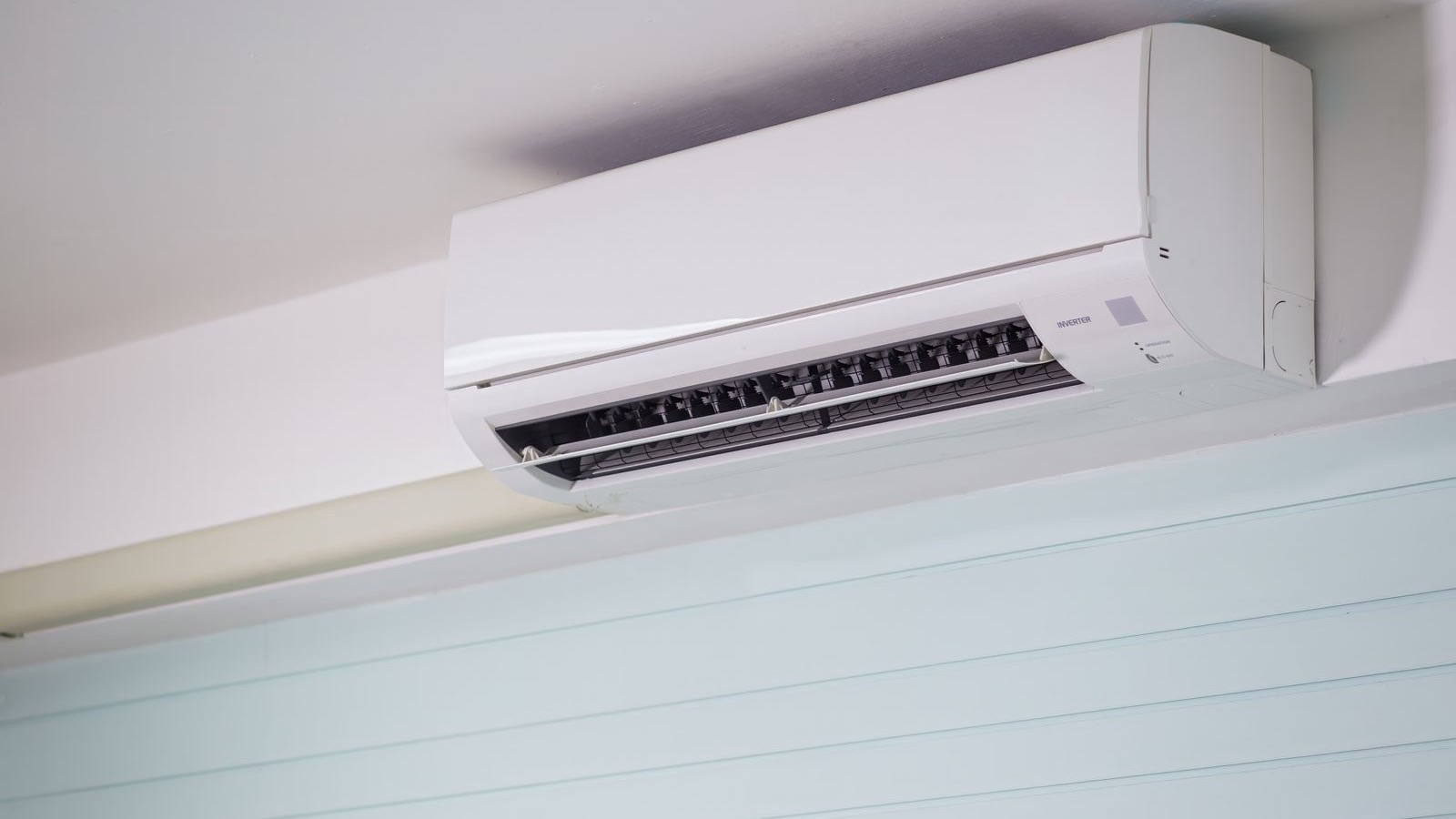
Which DIY Mini Splits Ship With Quick-Connect Line Sets?
Not every product labeled "DIY" ships with a pre-charged quick-connect line set. Many Pioneer, Senville and Cooper & Hunter systems still use flared connections that need a vacuum pump, gauges and sometimes EPA 608 certification. Systems that do ship pre-charged:
- Zone Air DIY Single-Zone (2026): 9,000 and 12,000 BTU models in 115V and 230V, shipped with a 25 ft pre-charged quick-connect line set using R-454B. Complete single-zone kits run roughly $1,799 to $2,049.
- Zone Air DIY Multi-Zone (2026): multiple indoor air handlers (for example 9K + 18K heads) on one outdoor condenser, each with its own pre-charged line set.
- MRCOOL DIY: the brand that put pre-charged Quick Connect systems on the map, with standard line sets starting at 16 ft and extension kits for certain SKUs.
- Klimaire KIWQ-KOIQ Series: pre-charged quick-connect tube systems in 9,000 and 12,000 BTU capacities on select SKUs.
Traditional brands such as Mitsubishi and LG do not ship pre-charged line sets; they require professional installation and vacuuming to keep full warranty coverage.
Our recommendation: for a single room, a 12,000 BTU single-zone system with a 25 ft pre-charged line set covers roughly 500–600 sq ft for about $2,000 in equipment. We lean toward Zone Air's DIY series for its self-install warranty (7-year compressor, 5-year parts). MRCOOL DIY is the better fit if you want the longest-running DIY brand and a 16 ft set for a condenser directly behind the wall. Klimaire is worth a look if its select quick-connect SKUs match your size.
How Pre-Charged Quick-Connect Line Sets Work
A line set is two insulated copper refrigerant lines (high-pressure liquid and low-pressure vapor) connecting the outdoor condenser to the indoor air handler.
- Pre-charged sets come sealed from the factory with the correct amount of R-454B (or R-410A on older stock). Spring-loaded or Schrader-style valves at each end hold the charge until the fitting is fully tightened.
- The quick-connect coupler is a threaded union with a built-in valve and a gasket or double O-ring seal. You thread it onto the service port, torque it to spec, and the valve opens: no flaring, brazing or vacuuming.
- Because the system is pre-evacuated and charged for a specific length, you skip the vacuum pump, manifold gauges and refrigerant scale.
- Common lengths are 16 ft and 25 ft. Zone Air cuts single-run pre-charged line sets to length from 5 to 75 ft; MRCOOL offers coupler kits to join two sets, up to 75 ft per indoor unit. Third-party couplers or aftermarket line sets can void the warranty.
Why Buy a Pre-Charged System
- Cost: a single-zone DIY system with a pre-charged line set runs roughly $1,800 to $2,400 in equipment, versus a typical $3,500 to $5,500 for a comparable professionally installed system.
- Fewer failure points: no brazing, nitrogen purge or deep vacuum, which removes the most common DIY mistakes (bad flares, poor brazed joints, moisture and air left in the lines).
- No refrigerant handling: no EPA 608 certification needed, and the circuit stays sealed from factory to final connection.
- Efficiency and zoning: Zone Air publishes SEER2 ratings up to 24 on its 230V models; each ductless head runs independently, and there are no duct losses (typically 20–30% of conditioned air in older homes).
Demand for these systems accelerated from 2024 to 2026 as EPA refrigerant rules tightened and R-410A inventory dwindled. Multi-zone installs are more work than single-zone because each head needs its own wall penetration, line route and connection.
Choosing the Right Line Set Length (16 ft vs 25 ft vs Longer)
The factory charge is matched to the line set length. A longer run than the charge allows can starve the system of refrigerant, reduce performance and void the warranty.
- 16 ft: condenser directly outside the wall behind the air handler, with minimal vertical lift.
- 25 ft: the most common length for a ground-level condenser outside a first-floor room, with slack for corners and a gentle vertical run.
- 35–50 ft: second-story installs, back-of-house placements or long horizontal runs. Zone Air cuts single runs up to 75 ft, so no couplers are needed.
Measure the actual route, including vertical runs and bends, not the straight-line distance, and add 3–5 ft of margin. A run beyond the factory-charged spec may need added refrigerant from a licensed technician.
What to Look For in a Quick-Connect Line Set
- Tubing: annealed copper sized to the system's BTU capacity. Zone Air's 25 ft set uses 3/8-inch closed-cell insulation rated for UV exposure.
- Pressure and pull testing: MRCOOL says its Quick Connect fittings are Intertek-certified (report 5029931) to UL 207 with a 921 PSI rating, and describes the design as patented.
- Valve and seal design: double O-ring seals and torque-limited connectors help prevent cross-threading and over-tightening, the two most common causes of leaks at connections.
- Labeling: the set should state the refrigerant (R-454B on 2026 models), maximum allowable length and approved indoor/outdoor pairings.
Cheap unbranded "pre-charged" sets may skip pressure testing or use insulation that degrades in sunlight within a year. Avoid any set that doesn't document test results, refrigerant type and approved pairings.
Installation Overview
Always follow the manufacturer's manual and local codes.
- Plan and measure the route from air handler to condenser and confirm the line set covers it, including lift and bends.
- Mount the indoor bracket with the template and check level; an off-level head won't drain condensate properly.
- Drill the wall penetration (typically 3 inches), angled slightly down toward the outside.
- Keep caps on the line set until final connection and respect the minimum bend radius.
- Route and connect: feed the set through the wall sleeve, connect the indoor unit first, then the condenser.
- Tighten to spec with two wrenches where specified, then soap-bubble test every joint.
- Start up: restore power, confirm cold air in cool mode and warm air in heat mode, and check the condensate drain.
With a helper to lift the condenser, most single-zone installs take an afternoon.
Limitations and Risks
- Common mistakes: bending lines past the minimum radius, cross-threading fittings, not supporting the line set at intervals, and skipping the leak test.
- Electrical service still matters. A 115V unit draws different amperage than a 230V model, and undersized wiring or a missing disconnect violates code. Some jurisdictions require a licensed electrician, a permit, or both.
- Warranty enforcement varies between DIY brands; keep records of each installation step.
- Call a professional to extend line sets beyond factory limits, add refrigerant, or handle 240V wiring you aren't comfortable with. Some homeowners hire a pro only for the electrical hookup and commissioning.
MRCOOL's Trustpilot profile showed 3.2 out of 5 from 89 reviews as of September 2026.
DIY Ductless vs Other HVAC Options
| Feature | DIY Ductless Mini Split | Central Ducted Heat Pump | Window/Portable AC |
|---|---|---|---|
| Duct losses | None | 20-30% typical | None |
| Zoning | Per-room control | Single thermostat (without dampers) | Per-unit only |
| Install complexity | Low (pre charged, quick connect) | High (ductwork, refrigerant work) | Lowest |
| Heating capability | Yes (heat pump) | Yes | Rarely |
| Efficiency (SEER2) | 20-24 | 15-22 | 8-12 |
Even "DIY-friendly" ducted kits usually need professional refrigerant work and duct design. The classic use case for a pre-charged mini split is a finished garage, attic or backyard office where new ductwork would be expensive and invasive.
Maintenance
- Clean or replace indoor filters every 1–3 months.
- Wash evaporator and condenser coils yearly with water and a soft brush; no harsh chemicals.
- Keep at least 12 inches of clearance around the condenser and clear away debris.
- Inspect line set insulation annually for UV damage, splits or chewing; re-wrap with UV-resistant tape.
- Check each condensate drain once per season.
- Have a professional check pressures and electrical connections every 2–3 years.
Well-maintained mini splits commonly last 12–15 years or more; keeping the quick-connect joints sound is a big part of avoiding leaks over that span.
How to Buy: Sizing and Bundles
- Use a BTU calculator or Manual J-style load tool. Popular DIY models range from 9,000 to 36,000 BTU; a small bedroom may need 9,000 BTU, a typical living room 12,000–18,000 BTU.
- Buy complete bundles (condenser, air handler(s), line sets at the required length, mounting hardware and communication cables) rather than mixing brands.
- Check pre-sale sizing help and post-sale support. Zone Air performs final assembly, testing and inspection at its U.S. facility, and its 7-year compressor and 5-year parts warranty remains valid with self-install.
Related guides
- DIY mini split with no HVAC contractor - what the EPA and local rules allow, tools, steps and warranty terms
- Best self install mini split: Zone Air, MRCOOL DIY, Pioneer and Senville compared
- MRCOOL DIY dual zone mini split with precharged line sets - 5th Gen line set limits, cold ratings and how Zone Air compares
- Multi zone quick connect line sets: MrCool vs Zone Air
- Step-by-step DIY mini split installation with quick connect line sets
- 9,000–12,000 BTU 115V DIY mini splits with pre-charged line sets
- Choosing the best DIY mini split
- MrCool alternatives for DIY mini splits
- Best mini split with no vacuum pump required
Get help choosing a DIY mini split
Specifications, prices and warranty terms are manufacturer-published as of September 2026 and subject to change. Verify current listings before purchase. MRCOOL is a trademark of its owner; HVAC On Sale is not affiliated with or endorsed by MRCOOL.