
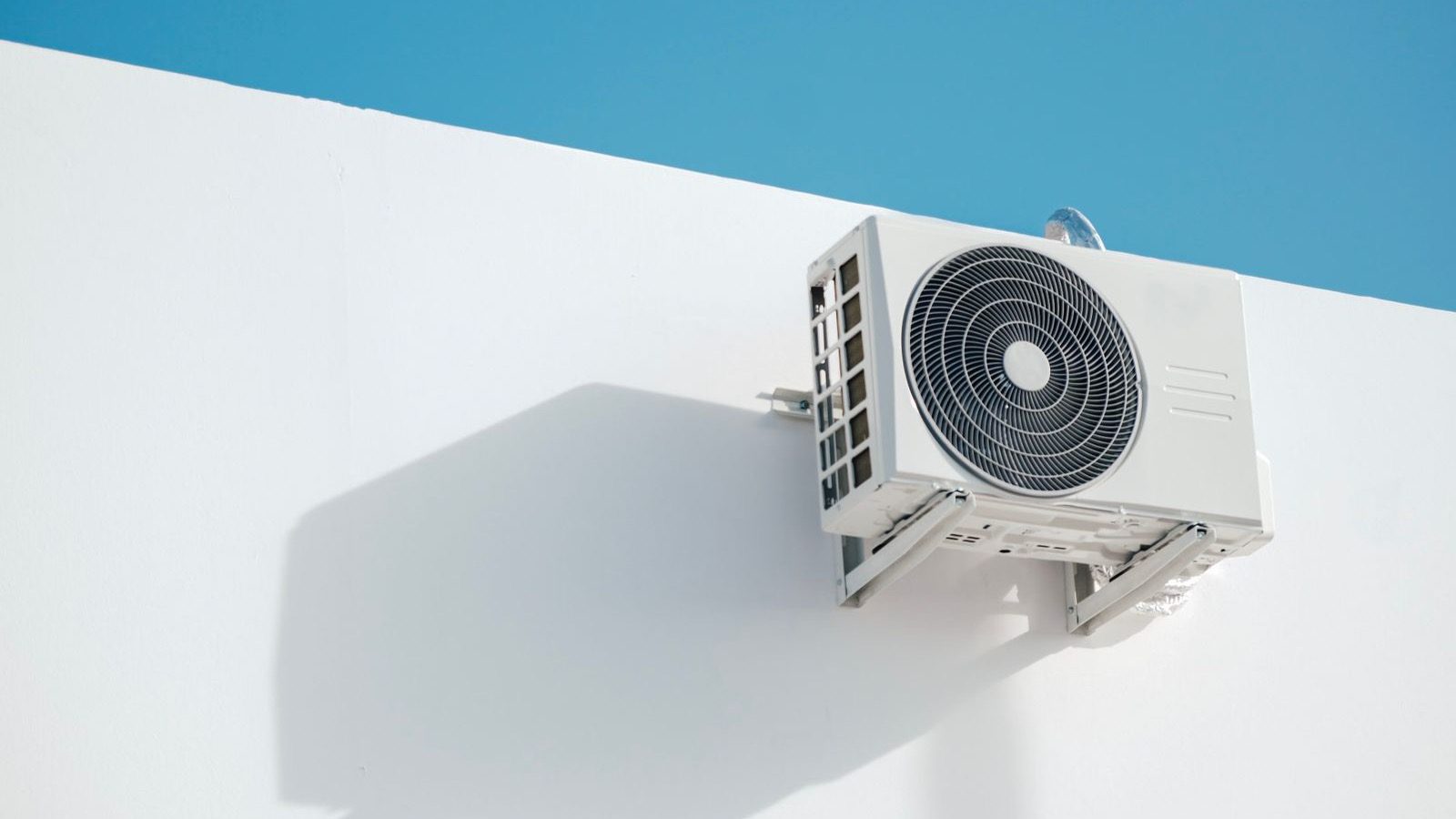
The single biggest difference is how much each refrigerant heats the planet. R-410A has a GWP of 2,088. R-454B has a GWP of 466, and that is 78% lower than R-410A. That gap is why the Environmental Protection Agency drew the line where it did, and why every new system rolling off production lines today uses a low GWP refrigerant like R-454B or R-32.
The short answer: If you're buying a new HVAC system in 2026 or later, R-454B is the clear default. It meets current EPA rules, delivers a small improvement in energy efficiency, and sets you up for 15+ years of parts and refrigerant availability. R-410A is still the right call only when you're repairing a younger existing system that doesn't make full replacement worth it yet.
What Is R-410A?
From the mid-2000s through 2024, R-410A was the main refrigerant in U.S. residential cooling. It's an HFC blend of R-32 and R-125 (50/50 by mass) with zero ozone loss - a major step forward over the R-22 it replaced. Its ASHRAE safety rating is A1: non-flammable and low danger, which made it simple to install and service in homes, attics and closets without special fire precautions.
Where R-410A falls short is its high global warming potential - about 2,088 on the 100-year GWP scale. R-410A has an air lifetime of 16.95 years, meaning every pound that leaks acts as a strong greenhouse gas that traps heat for over a decade and a half. That environmental impact is likely the driving force behind the EPA's phase-down. After January 1, 2025, the EPA will ban new R-410A systems, but the refrigerant itself stays available - and legal - for servicing existing units well beyond that date.
What Is R-454B?
R-454B is the leading replacement refrigerant for residential air conditioners and heat pumps in the United States. It's an HFO/HFC blend of about 68.9% R-32 and 31.1% R-1234yf, engineered to deliver similar operating pressures and cooling capacity to R-410A while cutting the global warming potential GWP to about 466. R-454B breaks down in the air in about 5.5 years, so its long-term environmental impact is far below R-410A's.
Under ASHRAE standards, R-454B is rated as A2L - low danger and slightly flammable. That rating means modern R-454B systems include leak detection and ventilation features, automatic compressor shut-off and electrical components specifically engineered for A2L use. Major manufacturers including Carrier (marketing it as "Puron Advance"), Trane, Bryant, Rheem/Ruud, and Allied Air have built their 2025-and-newer residential product lines around R-454B. It's important to understand that R-454B is not a drop-in replacement for R-410A - it needs new equipment designed for its properties, including purpose-built compressors, coils and controls.
R410A vs R454B at a Glance
| Factor | R-410A System | R-454B System |
|---|---|---|
| Global Warming Potential | \~2,088 (high GWP) | \~466 (78% lower) |
| ASHRAE Safety Classification | A1 – non-flammable | A2L – mildly flammable |
| Ozone Depletion Potential | Zero | Zero |
| Regulatory Status (2025+) | Banned in new residential equipment | Compliant; primary choice for new systems |
| Typical Use Case Now | Servicing & repairing existing units | All new installations |
| Efficiency Trend | Baseline (met older SEER standards) | \~3–5% higher COP/SEER2 in matched systems |
| Atmospheric Lifetime | 16.95 years | \~5.5 years |
| Operating Pressures | \~390 psig | \~370 psig (5% lower) |
| Long-Term Service Outlook | Rising cost of refrigerant; shrinking supply | Future-proof availability; expanding technician base |
The takeaway is straightforward: R-454B is clearly stronger for any new purchase on every metric except the inherent simplicity of a non-flammable safety class. R-410A remains relevant only when you're deciding whether to repair an existing system or replace it.
Decisive Factor 1: Environmental Impact and Regulations
Environmental regulations aren't just policy ideas - they determine what equipment you can legally buy, how long you can service it, and what it'll cost to keep running. If you're a homeowner who's investing in an AC system expected to last 12–18 years, the regulatory path of your refrigerant matters as much as the SEER2 rating.
The numbers tell a direct story. Each pound of R-410A that leaks into the atmosphere has a GWP of 2,088: the warming effect of nearly a ton of carbon dioxide. R-454B has a Global Warming Potential of 466, a lot lower than R-410A's 2,088, and its shorter air lifetime (5.5 years vs. 16.95 years) means it leaves the air about three times faster. Both R-410A and R-454B have an Ozone Depletion Potential (ODP) of zero, meaning neither damages the ozone layer - but on greenhouse gas emissions, R-454B is a major step forward.
The transition from R-410A to R-454B is driven by global and national environmental regulations designed to reduce greenhouse gas emissions. Federal regulations like the EPA AIM Act (the American Innovation and Manufacturing Act, signed in late 2020) give the Environmental Protection Agency authority to phase down high-global-warming-potential hydrofluorocarbons. Under the EPA's Technology Transitions Rule, new residential and light commercial AC and heat pump systems manufactured or brought in after January 1, 2025 must use refrigerants with a GWP of 700 or lower. R-410A fails that test. R-454B passes it easily.
Looking ahead, the EPA is trying for an 85% reduction in HFCs by 2036. By 2036, R-410A production will be reduced by 85%, which means R-410A's rising cost and smaller supply are baked into the schedule. R-454B fits with both U.S. and global efforts to curb environmental concerns tied to high-GWP refrigerants.
Decisive Factor 2: Safety and Handling (A1 vs A2L)
Safety classification is where R-410A still holds a narrow edge. The ASHRAE safety classification system can break refrigerants into groups based on danger and flammability. R-410A is classified as A1, meaning it is non-flammable and has low danger - the simplest class for residential use. R-454B is classified as A2L, showing mild flammability with a slow burning velocity and high minimum ignition energy.
That said, equipment designed for R-454B must account for its mild flammability and include specific safety provisions. Modern R-454B systems come with advanced safety features: integrated leak detection sensors, automatic compressor shut-off, controlled ventilation paths for the indoor blower fan area, and electrical components rated for A2L environments. Updated safety protocols are needed for handling R-454B, and R-454B systems must be installed by certified professionals who have completed A2L training. Local building codes have been updated across most areas to address A2L installation in attics, closets and other tight mechanical spaces.
R-410A's non-flammable A1 rating means simpler tools, fewer code layers and a longer track record of incident-free residential use. That's a real advantage - but it's an advantage attached to a refrigerant you can no longer get in new equipment.
Winner: R-410A on raw flammability profile. But for new systems, this factor alone doesn't beat R-454B's environmental benefits and regulatory compliance. When installed to current code by HVAC professionals trained on A2L safety requirements, R-454B systems are considered safe for residential use - including in attic and closet installations. The engineered safety provisions ensure absolute safety isn't given up for environmental responsibility.
Decisive Factor 3: Performance, Efficiency and Comfort
Performance is where the decision hits your utility bills directly. In a climate like Pensacola's - where NOAA's 1991–2020 numbers show 2,609 cooling degree days versus 1,537 heating degree days, and the AC runs about eight months a year - even small efficiency gains compound into real savings over a system's life.
R-454B systems can achieve 3% to 5% higher COP than R-410A in well-designed matched systems. Lab testing at Oak Ridge National Laboratory showed R-454B delivering about 7% higher SEER than matched R-410A units in split heat pump configurations using both tube-fin and small-channel heat exchangers. In a variable-speed brine-to-water heat pump study, R-454B gave 1–3% higher COP while needing 5–16% less refrigerant charge to get the best performance.
There are trade-offs. For equivalent cooling capacity, R-454B is going to need 10% to 20% larger coils, which manufacturers address through redesigned condenser coil and evaporator sizing. Heating capacity dropped 6–8% under certain conditions in the brine-to-water tests, and discharge temperatures ran 7–13 K higher, which is something that affects compressor cooling design. These are engineering challenges that unit manufacturers have addressed in their systems designed for R-454B - they aren't problems a homeowner needs to solve.
R-454B has a temperature shift of about 1.5°F, meaning the refrigerant's boiling and condensing temperatures move slightly during phase change. R-410A operates like a near-single fluid with almost no shift. Manufacturers handle this through tuned expansion devices and coil design. Operating pressures for R-454B are very close to R-410A (R-454B operates at about 370 psig, 5% lower than R-410A), ensuring similar thermodynamic behavior and cooling capacities.
For residential cooling in hot, humid climates like the Gulf Coast, the improved efficiency of R-454B translates into better moisture removal and lower power consumption during the long cooling season. Modern R-454B systems are engineered for high SEER2 ratings and strong latent (humidity) removal - exactly what matters in a region that gets 65.27 inches of annual rainfall.
Decisive Factor 4: System Cost, Lifespan and Service
On upfront equipment cost: early R-454B units carried a small premium due to new components, A2L safety controls and limited production scale. By 2026, pricing has largely come together. Industry reporting confirms that the cost difference between similarly rated R-410A and R-454B systems is now more about efficiency tier, features and brand than about refrigerant type. We see the same pattern in the systems we quote - a 16-SEER2 R-454B unit and a 16-SEER2 R-410A unit of similar capacity from the same manufacturer tend to land in a similar price range.
On service and repair: R-410A parts and refrigerant stay widely available for existing systems today. Existing R-410A systems can still be serviced with reclaimed refrigerant. But as the EPA phase-down moves forward - R-410A production will be reduced by 85% by 2036 - the rising cost of R-410A refrigerant is baked into the supply curve. R-454B refrigerant supply had some early bottlenecks (tank shortages during the 2025 ramp-up), but availability has improved a lot and the technician training pipeline is expanding rapidly.
Decisive Factor 5: Compatibility and Upgrade Path
R-454B is not a drop-in replacement for R-410A. Existing R-410A systems cannot be retrofitted for R-454B. The differences span safety class (A1 vs. A2L), oil compatibility, temperature shift behavior and the fact that R-454B systems need specialized compressors and coils that are UL-listed for A2L refrigerants. A contractor cannot just flush R-410A lines and charge the system with R-454B - doing so would break manufacturer specs, void warranties and likely conflict with local building codes.
Here's what the upgrade path actually looks like for homeowners with R-410A equipment:
-
Minor repairs on a younger system (say, under ~10 years old): fix it with R-410A parts and refrigerant. Budget for the reality that R-410A refrigerant will cost more over time, but the math usually still favors repair over full replacement.
-
Full replacement means new indoor and outdoor units, and often taking another look at line sets, electrical service and airflow to meet current code and manufacturer requirements.
R410A vs R454B: Which Should You Choose?
-
You're replacing an older central AC or heat pump and want 10–15+ years of regulatory compliance without having to worry about whether refrigerant will be available.
-
You want new HVAC systems that meet current safety requirements and deliver improved efficiency out of the box.
If you'd like to compare specific R-454B systems - tonnage, SEER2, heat pump vs. AC-only, voltage and breaker requirements - email us at [email protected] for a written quote matched to your home, electrical service and shipping location.
Frequently Asked Questions About R410A vs R454B
Can I recharge my existing R-410A system after 2025, or do I have to switch to R-454B?
You can legally continue to service and recharge R-410A systems. The EPA's AIM Act restricts the manufacture and import of new R-410A equipment - not the repair of existing units. R-410A refrigerant (including reclaimed refrigerant from recovered systems) will stay available for servicing. However, as R-410A production is phased down, expect the price per pound to climb over the coming years, making large leak repairs on older units less and less attractive.
Is it safe to have a mildly flammable refrigerant like R-454B in my attic or closet air handler?
R-454B's A2L rating means mild flammability with a slow burning velocity and high minimum ignition energy - it's really difficult to ignite under real-world conditions. Systems designed for R-454B include advanced safety features: leak detection sensors, automatic shut-off controls, controlled airflow paths to move any released refrigerant away, and A2L-rated electrical components. When installed to current code by a licensed, A2L-trained contractor, attic and closet installations are considered safe and code-compliant. The indoor air in your home is not at risk from a properly installed R-454B system.
Can a contractor flush R-410A lines and use R-454B?
No. R-454B is not a drop-in replacement for R-410A. Mixing refrigerants or using R-454B in R-410A-rated equipment breaks manufacturer specifications, voids warranties and likely violates local building codes. A proper transition needs R-454B-rated indoor and outdoor units - including specifically engineered compressors, coils and controls - and often involves replacing or thoroughly checking the line set and control wiring per manufacturer instructions.
Related guides
- Best Multi Zone Mini Split Quick Connect Line Sets: MrCool vs Zone Air
- Best 2 Zone DIY Mini Split Systems for 2026
- DIY Mini Split That Plugs Into an Outlet: 115V Plug-In Guide
- Easiest DIY Mini Split Installation: Pre-Charged Quick Connect
- Best DIY Multi Zone Ceiling Cassette Mini Split Systems
Specifications, prices and warranty terms are manufacturer-published or publicly listed as of October 2026 and subject to change. Verify current listings before purchase. Brand and product names mentioned are trademarks of their respective owners. HVAC On Sale is not affiliated with or endorsed by them.