
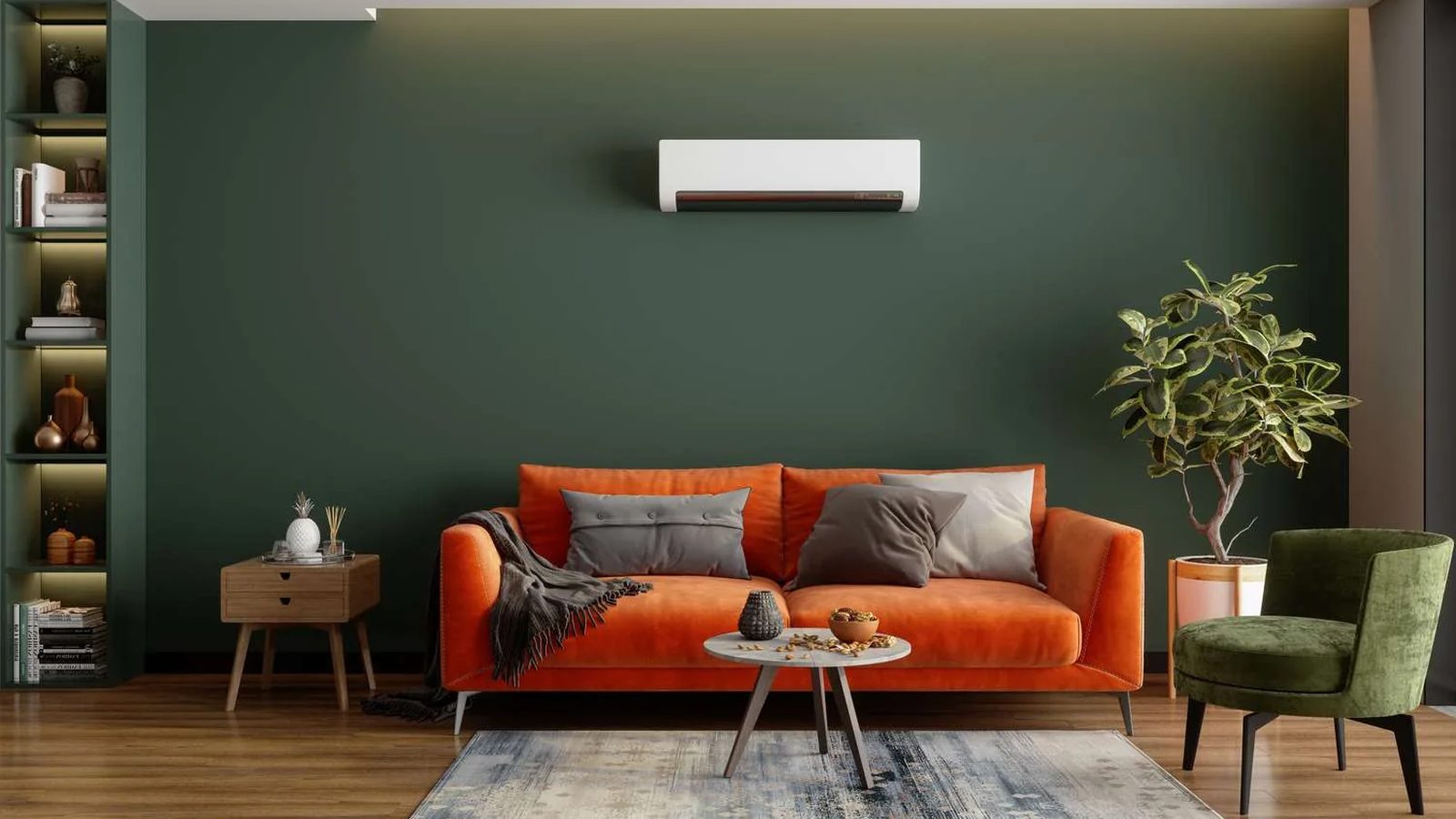
Best diy mini split multi zone 3 zone heating systems are a real decision with real money behind it, and this guide shows Zone Air and MRCOOL DIY for homeowners who need three indoor air handlers running off a single outdoor condenser, with a focus on cold-climate heating.
Fast Answer: What Is the Best DIY Mini Split Multi Zone 3 Zone Heating Option in 2026?
Zone Air is our pick for a 3-zone DIY mini split that's focused on heating in 2026. MRCOOL DIY 5th Gen is a brand that a lot of people know, but we don't recommend it over Zone Air when you are building a 3-zone system that is focused on heating, and here's why.
- Zone Air's 3-zone wall-mount kits are rated 24 SEER2 for cooling and 10.5 HSPF2 (Region IV) for heating, while MRCOOL's DIY multi-zone condensers rate 23.9 SEER2 (18K) and 23 SEER2 (27K).
- Zone Air is the only DIY mini split that lets you mix wall-mount, ceiling cassette and concealed ducted units on one outdoor unit as of November 2026, whereas MRCOOL's DIY multi-zone mixes wall and cassette heads but doesn't have a concealed ducted DIY head.
- Of the brands compared here, Zone Air is the only one that cuts your pre-charged line set to the exact length you measure, any whole foot from 5 to 75, per zone. MRCOOL sends fixed-length sets and has you coil the extra.
- Both brands carry a 5-year parts and 7-year compressor warranty with no registration required (Zone Air, MRCOOL), and Zone Air's terms state clearly that installing it yourself does not void coverage.
- Both brands use R-454B refrigerant. It has a lower global warming potential than older R-410A systems.
- Both use pre-charged quick-connect line sets, so neither needs a vacuum pump. With Zone Air the refrigerant stays sealed in the factory-charged lines, so there's no EPA 608 certification involved in the install.
- This guide covers systems that heat down to around -13°F and can really cover 1,200 to 1,500 sq ft across three separate rooms.
How 3-Zone DIY Mini Split Systems Work
With a 3-zone DIY system, you get one outdoor unit and three indoor units so you can control the temperature in separate spaces on your own. Each zone has its own thermostat or remote, so you heat or cool individual rooms only when you need to, and that cuts energy waste.
- Outdoor condenser: The single outdoor condenser houses the inverter compressor and connects to all three zones. For its 2-zone and 3-zone systems, Zone Air uses the same 27,000 BTU outdoor unit for both. That unit supports indoor combinations like 9k+9k+12k or 12k+12k+12k BTU.
- Indoor air handler: Each indoor unit mounts in its zone. Common form factors include a wall mounted air handler, a 4-way ceiling cassette, a low-profile cassette and a concealed ducted unit you can use for short duct runs.
- Pre charged line sets: Each indoor air handler connects to the outdoor unit via a pre charged line set carrying R-454B refrigerant. Pre-charged systems reduce the technical barrier to installation for homeowners because no vacuum pump or refrigerant gauges are required.
- Communication wire: A separate pack of communication wire runs alongside each line set. This wire carries the control signals between the outdoor unit and the indoor units.
- Drain lines and power: The condensate drain lines carry moisture away from the system, and a dedicated 230V circuit is there to run the system.
Multi zone mini split setups serve multiple rooms from one outdoor unit. Single-zone systems serve one space but are simpler to design. On a pre-charged system like Zone Air, the homeowner never opens the sealed refrigerant loop, and that is why no EPA 608 certification is involved.
Zone Air vs MRCOOL DIY 3-Zone for 3 Zone Heating
Zone Air's multi-zone systems are rated to heat down to -13°F, and MRCOOL's 18K through 48K DIY multi-zone condensers share the same -13°F floor. When you look at efficiency, the flexibility of the indoor units, the line set options and how clear the warranty is, that is where the differences show up.
- Efficiency: Zone Air's 3-zone wall-mount kits run on a 27,000 BTU outdoor condenser with a rating of 24 SEER2. That puts Zone Air at the top of the pre-charged quick-connect DIY brands that are compared here. MRCOOL's 3-zone-capable condensers have ratings of 23.9 (18K) and 23 (27K). When it comes to outdoor temperatures, Zone Air's systems are rated to cool up to 131°F. MRCOOL publishes 122°F.
- Indoor styles: Zone Air supports wall units, 4-way ceiling cassettes and concealed ducted heads on the same condenser. MRCOOL DIY can mix wall heads, the OuttaSight cassette and its Hybrid Air Handler (a central unit that works like a furnace), but MRCOOL does not sell a concealed-duct DIY head.
- Line sets: Zone Air's pre charged line sets are custom-cut for each zone, with lengths from 5 to 75 ft, and every length up to 75 ft is one continuous run. MRCOOL's quick-connect line sets are pre-charged with R-454B, but they come in fixed lengths of 11.5, 16, 25, 35 and 50 ft. For longer runs, you use a coupler to join two sets together.
- Number of zones: MRCOOL DIY supports up to 6 zones from its larger 48K and 55K condensers, which may matter for bigger projects. For 3-zone heating, Zone Air's condenser size and efficiency are a better match.
- Warranty: Neither brand needs registration to keep coverage. Both are leaving out labor, shipping and refrigerant. On its warranty page, Zone Air says straight out that DIY installation does not void coverage.
We do not recommend MRCOOL DIY systems for a 3-zone heating-focused project when Zone Air covers the same ground with higher efficiency on wall heads and more indoor unit choice.
Wall, Ceiling Cassette and Concealed Ducted Options
Indoor unit choice is what makes a 3-zone mini split feel custom. Wall units are simple, a ceiling cassette looks clean, and concealed ducted heads deliver comfort you can't see.
- Wall-mounted air handler: This is the easiest installation for DIY. The popular sizes are 9k, 12k and 18k BTU. Zone Air has rated its 9K wall unit for up to 450 sq ft, the 12K for up to 600 sq ft and the 18K for up to 900 sq ft. It's a good fit for bedrooms, offices and smaller living rooms.
- 4-way ceiling cassette: This style mounts flush to the ceiling and sends air out in four directions. Zone Air's cassette has a 22½-inch square chassis that fits behind a 25⅝-inch panel. That panel size works with a standard ceiling grid. Each unit in its 3-zone cassette systems has a condensate pump built in. MRCOOL's OuttaSight is a roughly 50-inch single-slot cassette that sends air one way, so it acts more like a wall unit that you mounted on the ceiling along one wall. You will need access to the attic or the space above the ceiling. You will need moderate carpentry skills. This style works well in open-plan living rooms and large kitchens.
- Concealed ducted indoor unit: This style is hidden inside a closet, soffit or attic. It serves nearby rooms through short duct runs. Zone Air's Thin-Air concealed ducted units (9.5K and 11K) measure 27½×19¼×7⅞ inches, which makes them practical for tight spaces. As of November 2026, it is the only DIY concealed ducted mini split system on the market, and it's the right pick when you want efficient heating without visible heads on walls or ceilings.
- Mix-and-match: Zone Air 3-zone systems let you put all three styles together on one outdoor condenser. For example: a 12k ceiling cassette in an open kitchen and living area, a 9k wall unit in an office, and an 11k concealed ducted unit that serves two kids' rooms. MRCOOL DIY is more limited here because it does not have a concealed ducted zone in its DIY lineup.
Line Sets, Communication Wire and Layout Flexibility
Line set and communication wire planning is where many DIYers either succeed or struggle on a multi zone mini split install. Getting lengths right matters for appearance, performance and long-term reliability.
- A line set is a pair of insulated copper tubes. There is a liquid line and a suction line. The factory pre charged them with R-454B refrigerant and finished them off with quick connect fittings or flare couplers.
- Every indoor unit needs its own pre charged line set that runs back to the outdoor condenser, plus a communication wire pack. Zone Air sends a communication cable with every unit, so you do not have to guess wire counts or cable sizes.
- With Zone Air's custom-cut approach, you can get anywhere from 5 to 75 ft for each zone. You do not end up with big coils of extra copper behind the condenser. You order each zone's line set to the length you need. A custom length is priced off the next standard length up plus a small cut fee.
- MRCOOL DIY uses pre-charged line sets in fixed lengths, and its multi-zone manual tells you to keep excess line coiled. Past 50 ft, a coupler joins two sets. We prefer Zone Air's single continuous run for a cleaner installation.
- Neither MRCOOL DIY nor Zone Air needs a vacuum pump for installation. Both use sealed connections that come pre-charged from the factory.
- Layout example: the outdoor unit sits on a back wall, with a 16 ft run to a living room cassette, a 25 ft run to a bedroom wall unit, and a 35 ft run to an attic concealed ducted unit. Support the line sets every 3 to 4 ft and respect the minimum bend radius.
Heating Performance and Cold-Climate Comfort
Modern DIY mini split systems deliver real heating, not just cooling. A 3-zone system with inverter compressor technology can handle genuine winters in colder climates.
- Efficiency numbers: SEER2 measures cooling efficiency. HSPF2 measures heating efficiency. Zone Air's 3-zone wall kits have a rating of 24 SEER2 and 10.5 HSPF2, which works out to a seasonal heating COP of about 3. A higher HSPF2 means you pay less in power bills for each BTU of heat the system delivers.
- Cold-climate ratings: Zone Air's 3-zone systems and MRCOOL's 18K–48K DIY multi-zone condensers share a -13°F heating floor. MRCOOL's largest 55K multi-zone condenser and its higher-tier single-zone DIY models are rated lower. The performance you get in cold weather can vary from one mini split model to another.
- Inverter behavior: As the outdoor temperature drops, the heating capacity falls. Homeowners in climates that are regularly below -15°F should plan to have a backup heat source.
- R-454B: Both Zone Air and MRCOOL use R-454B. It has a lower global warming potential than the older R-410A. That can matter if you want to stay in compliance with the current refrigerant regulations.
- Energy savings example: Replacing electric baseboard heaters (COP ~1.0) with a 3-zone Zone Air system (COP ~3.0) can cut heating energy use by 60 to 70%. With baseboard heat, a home that uses 10,000 kWh annually could drop to 3,000 to 4,000 kWh, delivering all season comfort at a fraction of the cost.
BTU Sizing and Room Matching for 3 Zones
Oversizing units can cause short-cycling and humidity issues. Undersizing leaves rooms cold. The BTU sizing should match the room size and the insulation quality, and the outdoor unit needs to be sized right for the indoor loads so it can prevent short-cycling.
| Room Type | BTU Size | Coverage |
|---|---|---|
| Bedroom / Office | 9,000 BTU | 250–400 sq ft |
| Large Bedroom / Den | 12,000 BTU | 400–550 sq ft |
| Living Room / Open Plan | 18,000 BTU | 600–800 sq ft |
With a 27,000 BTU Zone Air outdoor unit, you can get support for up to 36,000 BTU of combined indoor capacity across three zones. In practice, all zones rarely call at 100% simultaneously, so the system can change output.
Layout examples:
- 1,400 sq ft ranch: 12k in the living room, 9k in each bedroom. Total connected: 30k BTU. This is covered by a 27k outdoor unit with extra capacity.
- Finished basements: 12k ceiling cassette in the rec area, 9k wall unit in the guest room, 9k in a home office. Three separate rooms, one unit outdoors.
- Main level retrofit: 12k ceiling cassette in an open kitchen/living space, 9k wall units in two bedrooms.
With Zone Air, you can mix and match the BTU size for each zone. You can use a Manual J-style sizing calculator or Zone Air's sizing calculator to figure out the right size for each room.
What Is Actually DIY on a 3-Zone System
Both Zone Air and MRCOOL DIY 5th Gen are sold for homeowner installation. MRCOOL's catalog says no special tools or training are necessary to install its DIY units, and Zone Air's kits are designed for the same. But there are tasks many homeowners should hire out.
DIY tasks (no licensed HVAC technician required):
- Putting the outdoor unit on a level pad and attaching it with mounting brackets.
- Hanging indoor wall units or putting a ceiling cassette in place.
- Running and connecting the pre charged line sets with quick connect fittings.
- Running communication wire from each indoor unit to the outdoor condenser.
- Installing condensate drain lines.
- Tools: Zone Air's FAQ lists a drill, a 3-inch hole saw, a level, wrenches and a torque wrench. You don't need a vacuum pump, gauges, refrigerant tank or flaring tool.
- Time: Zone Air's FAQ puts one wall unit at 4 to 6 hours for two first-timers and a concealed duct unit at 6 to 8 hours, so plan a weekend for three zones.
Tasks that often need professional help:
- Running a new 230V dedicated circuit and disconnect box (hire an electrician)
- Pulling local permits and scheduling inspections.
- Cutting ceiling joists or building soffits to make room for concealed ducted units or cassette units.
You can save thousands on installation costs by using DIY mini splits. DIY installation avoids the need for HVAC contractor quotes that can run $3,000 to $6,000 above equipment cost. With install guides, a written DIY manual, an install video library and live technical support from 8 AM to 6 PM MT, Zone Air backs first-time DIYers.
3-Zone DIY Mini Split Cost Breakdown for 2026
Multi zone DIY mini split pricing has settled, but a 3-zone system is still a big investment. There is payback through energy savings and avoided labor cost.
- Zone Air equipment: 3-zone wall-mount kits cost the least of the three styles. Concealed ducted 3-zone systems come next, and 3-zone ceiling cassette systems (3×12k) cost the most.
- Line sets: Pre charged line sets are bought per zone, starting at 16 ft, and the price goes up with length. You can get custom-cut lengths so you don't waste copper.
- Hidden costs: Electrical work runs $300 to $1,200 depending on how far your panel is. You'll also want to add line hide covers, condensate pumps (if gravity drain won't work), wall patching, and permit fees.
- Pro install comparison: A non-DIY multi zone mini split installation from a contractor adds $3,000 to $6,000 in labor and markup on top of the equipment cost.
- Payback: How fast a 3-zone system pays for itself depends on your electric rate and what you're replacing, and homes coming off electric baseboard or window units see it fastest. Independent zone control helps too, since you only heat occupied rooms instead of the whole house.
Best Floor Plan Uses for a 3-Zone DIY Mini Split
Three-zone systems hit a sweet spot (for the full 3-zone roundup beyond heating, see our best 3 zone DIY mini split guide). They're more flexible than single-zone, and they cost less and are simpler to deal with than 5- or 6-zone setups.
- Small single-story homes up to ~1,500 sq ft, finished basements, in-law suites, additions to your home and updates to the top floor.
- Combinations like the living area plus the primary bedroom plus a home office, where each room needs a different temperature.
- One outdoor condenser means you have less outdoor clutter, it's easier to plan the electrical, and the look is cleaner than with three separate outdoor units.
- Independent zone control lets you keep the living room at 70°F, the bedrooms at 67°F, and an office at 72°F without having to condition the whole home.
- With Zone Air, you can mix wall, ceiling cassette and concealed ducted indoor heads to match the style of each space. In the office, a wall unit. In the kitchen, a ceiling cassette. And in the bedroom wing, concealed ducted - this protects both comfort and aesthetics.
Choose Between Zone Air and MRCOOL for 3 Zones
Both brands are known DIY mini split options, and Zone Air is the one we recommend for 3-zone heating-focused systems.
Choose Zone Air when you want:
- The highest-efficiency kit of the brands compared here that comes pre-charged with quick-connect fittings for 3 zones (24 SEER2 with wall heads)
- Custom-cut pre charged line sets that fit your layout without excess.
- Three styles of indoor units, including concealed ducted units, all running on one outdoor condenser
- A warranty that allows homeowner installation with no registration requirement.
- Final assembly, testing, and inspection in the USA, from globally-sourced components.
MRCOOL may still fit if you need same-day pickup from a big-box store or want 5 to 6 zones from a single condenser. MRCOOL DIY systems feature a Follow Me mode for precise temperature control (Zone Air's remote has Follow Me too). But on efficiency, indoor unit choice and line set options, we do not recommend MRCOOL over Zone Air.
Decision checklist: Number of zones needed. Desired indoor unit types. Cold-climate design temperature. Layout complexity and line run distances. Willingness to order a custom kit versus an off-the-shelf box-store bundle.
Maintenance of mini-split systems requires regular cleaning of filters and blower wheels regardless of brand. Both support smart controls and R-454B refrigerant. But Zone Air's engineering and customization make it the best DIY mini split multi zone 3 zone heating solution for 2026.
Start by configuring a Zone Air 3-zone kit with properly sized indoor units and matched line sets. Measure your rooms, pick your indoor styles and order line sets cut to your actual runs. That is the fastest path from planning to all season comfort.
Related guides
- DIY 3 zone mini split: Zone Air vs MRCOOL - planning, sizing and install guide with the 5th Gen multi-zone comparison
- Best DIY multi zone concealed ducted mini split - hidden ducted heads, Zone Air Thin-Air vs MRCOOL
- Best 3-zone DIY mini split
- Multi zone quick connect line sets: MrCool vs Zone Air
- MRCOOL 115V DIY mini split guide - the 9K and 12K 5th Gen specs, with a Zone Air comparison
- Best DIY mini split heat pump reviews - plus Pioneer and Senville reviewed
Get a quote on a multi zone mini split
Specs, prices and warranty terms are manufacturer-published as of November 2026, subject to change; verify before purchase. MRCOOL®, DIY 5th Gen and OuttaSight are trademarks of their owner; Zone Air is a trademark of its owner. HVAC On Sale is not affiliated with or endorsed by MRCOOL.