
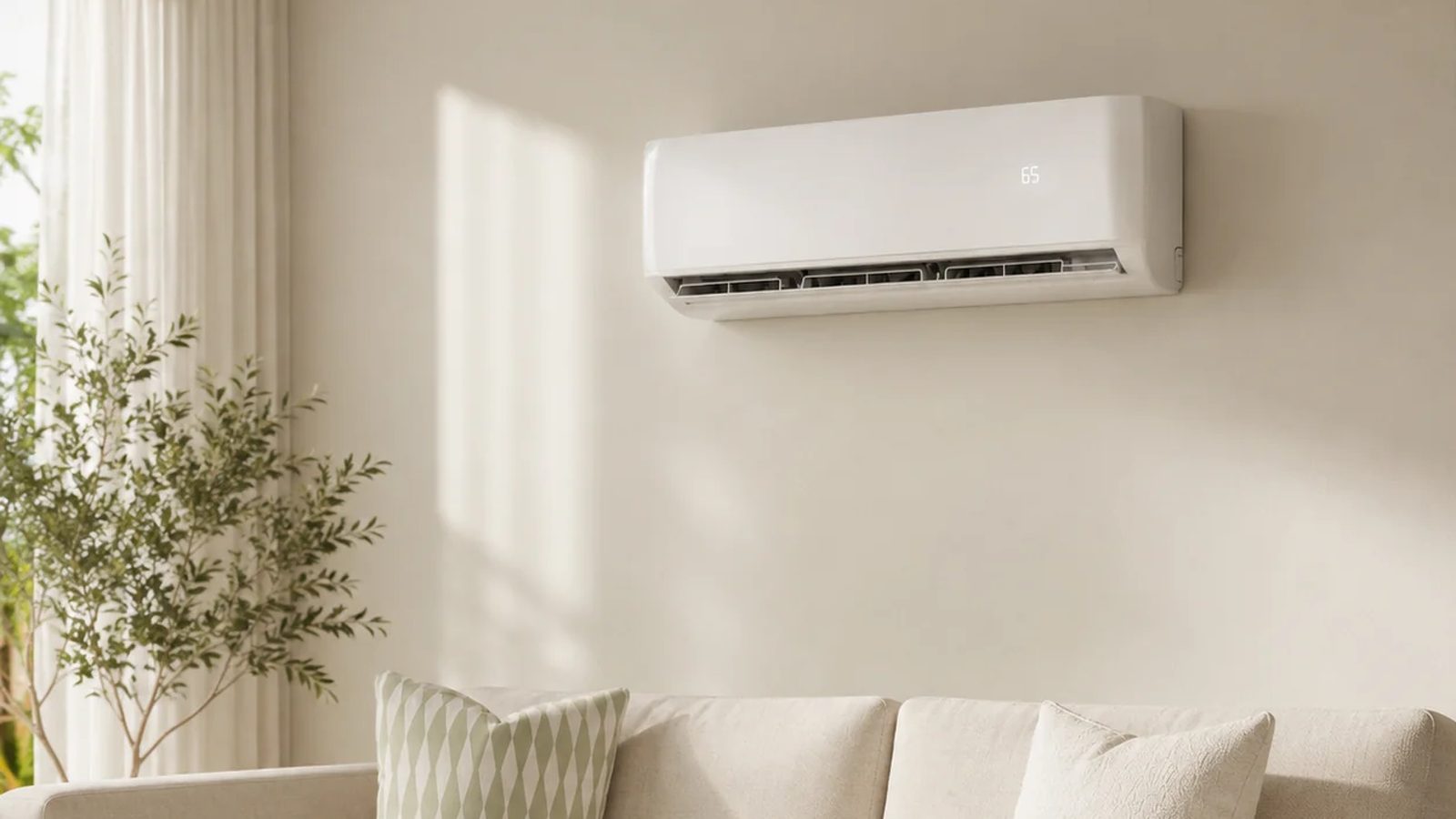
If you're reading best DIY mini split heat pump reviews for your house in 2026, know that the landscape has shifted. New refrigerant rules favor R-454B systems, SEER2 ratings have replaced older metrics, and the gap between DIY mini split kits and standard professional install brands has narrowed in performance while widening in cost savings. This guide breaks down the four brands homeowners ask about most - Zone Air, MRCOOL DIY, Pioneer, and Senville - with specs, pricing, and warranty details so you can decide with confidence.
Quick Answer: Best DIY Mini Split Heat Pumps for 2026
Zone Air earns the top spot as the best overall DIY mini split for 2026. Its 230V 9K and 12K wall mounts are rated 24 SEER2, every system uses R-454B refrigerant and heats down to −13 °F, and single-zone wall mounts ship as a complete kit with a 16-ft pre-charged line set in the box. The warranty seals it: 5-year parts and 7-year compressor coverage with no registration deadline, and installing it yourself does not void it.
For most homeowners shopping for heat pumps in 2026, Zone Air offers the better fit because it removes the two biggest pain points: paying for professional installation labor and worrying that self-install kills your coverage. The MRCOOL DIY 5th Gen 12,000 BTU 115V system is rated 23.5 SEER2 and was listed at about $2,359 at Home Depot in September 2026, while the Zone Air 12K 115V wall mount is $1,999.99 (October 2026), roughly 15% less.
Top picks at a glance:
- Best Overall DIY Mini Split: Zone Air 18,000 BTU wall mount (this one uses R-454B refrigerant, has a 23 SEER2 rating, heats down to −13 °F, and costs $2,599.99)
- Best Big-Box DIY: MRCOOL DIY 5th Gen 12k & 18k - widely available, strong efficiency
- Best Budget Standard Install: Pioneer Diamante 12k - lower equipment price, needs HVAC technician
- Best Low-Cost Cold Weather Standard: Senville AURA 12k - it has solid cold climate ratings, but you need a professional to install it
Each pick fits a different situation. Zone Air works better for first-time DIYers, cold weather cabins, garages and single zone room additions. MRCOOL DIY is for buyers who are locked into big-box shopping. Pioneer fits homeowners who are comfortable with tools and already have a trusted installer. Senville AURA is aimed at budget-conscious buyers in mild-to-moderate cold climates who can find affordable HVAC labor.
All pricing was checked in October 2026 unless it says otherwise.
How We Compared DIY and Standard Mini Splits
To rank these mini split brands fairly, we looked at each system across seven areas that are standard to check:
- Total installed cost - equipment price plus realistic install expenses
- DIY vs professional install pathway - does the unit truly allow homeowner installation?
- Efficiency - SEER2 and HSPF2 under the current DOE test standards
- Cold climate and cold weather performance - the heat output at 5 °F and the lowest temperature the unit can operate at
- Warranty strength - coverage for the compressor, coverage for parts and whether a self-install voids your protection
- Owner experience - return terms, tech support quality
- Multi zone options - room to grow for whole-home projects
For true DIY mini split kits like Zone Air and MRCOOL DIY, your total cost is basically the equipment plus whatever you pay for electrical work and permits. With standard mini split systems from Pioneer and Senville, you'll need professional installation and that adds $1,000 to $3,500 depending on how complex the job is and where you live.
One thing that changed recently: the federal Section 25C energy efficient home improvement credit ended for equipment that was placed in service after December 31, 2025. In 2026 the money comes from local utility rebates and state programs, so you should check those before you buy.
Zone Air vs MRCOOL DIY Best DIY Mini Split in 2026
This is the matchup most buyers are looking at in 2026. MRCOOL's 5th Gen line is a genuine step forward. MRCOOL DIY systems use pre-charged Quick-Connect lines, and MRCOOL says "no special tools or training are necessary to install". If you self-install a MRCOOL DIY 5th Gen, it keeps its 5-year parts and 7-year compressor warranty, with no registration required - the same headline term as Zone Air.
Where Zone Air pulls ahead:
- Efficiency at 230V. At 24 SEER2 on 230V, Zone Air is the highest-efficiency pre-charged quick-connect DIY system of the brands compared here. MRCOOL's best single-zone is 23.6 SEER2. At 115V it changes: Zone Air's 115V units are 23 SEER2, MRCOOL's 23.5–23.6.
- Line sets cut to length. Of the brands compared here, Zone Air is the only one that cuts your pre-charged line set to the exact length you measure, any whole foot from 5 to 75 (as of November 2026). MRCOOL sends fixed 11.5, 16, 25, 35 and 50 ft sets plus couplers and you have to coil the excess.
- One continuous run to 75 ft. Unlike MRCOOL, which uses a coupler to join two sets when you need more than 50 ft, Zone Air gives you a single factory-sealed run with no field joint for their 25, 33, 50 and 75 ft sets.
- Plug-in 115V option. With the optional cord kit, Zone Air's 115V 9K and 12K can plug into a dedicated 15A GFCI outlet where local electrical code allows a plug-in install (never an extension cord). MRCOOL's 115V units are hardwired.
- Hot-climate cooling. Zone Air is rated to cool in outdoor temperatures up to 131 °F (MRCOOL publishes 122 °F).
- What's in the box. In a Zone Air single-zone wall kit, you get a remote, mounting hardware, the communication cable, drain hose and tape and the 16-ft pre-charged line set.
In cold weather the two are even: Zone Air is rated to −13 °F, which is the same floor as MRCOOL's standard DIY 5th Gen, and the higher-tier MRCOOL DIY models are rated lower. The current MRCOOL DIY units use R-454B too. Only the older 4th Gen (R-410A) is being closed out, so check the model number on any listing.
Who should pick which: Zone Air is the smarter buy if you are a first-time DIYer, a homeowner in a hot or cold climate, or a buyer who puts value first. MRCOOL DIY stays fine if you are a brand-loyal buyer or if you prefer to shop only at big-box retailers.
Zone Air vs Pioneer Budget-Friendly Mini Splits for Tool-Comfortable DIYers
Pioneer is not a true DIY mini split brand. Pioneer installations require a licensed HVAC technician for proper installation, and Pioneer units typically require standard flare connections for refrigerant line hookups. That means you need a vacuum pump, manifold gauges, flaring tools and often an EPA license or a contractor who holds one.
Popular Pioneer models in 2026 - like the Diamante 12k R-454B - sit around $900–$1,200 for equipment alone. That looks like a lower price until you add labor. A typical scenario: $1,100 Pioneer unit + $1,500 professional install + $150 in materials = $2,750 all-in. The Zone Air 12K 115V kit at $1,999.99 installed by the homeowner (with perhaps $200 for an electrician to wire the circuit) totals about $2,200.
Pioneer units typically achieve SEER2 ratings between 19 and 21, while Zone Air's wall mounts are 23–24 SEER2. Pioneer's performance also depends heavily on refrigerant charge quality - a factor entirely in the installer's hands. Zone Air's factory-sealed, pre-charged line sets remove that variable.
Pioneer provides a 5-year warranty on parts. Pioneer models heat down to −13 °F in several cold climate sizes, which matches Zone Air's −13 °F floor. But Zone Air achieves that without requiring you to pay an HVAC professional.
Bottom line: Pioneer works for buyers who already have an EPA certification or a trusted contractor at good rates. For true DIY projects without refrigerant tools, Zone Air is the better fit.
Zone Air vs Senville Value Mini Splits vs True DIY Convenience
Senville positions its LETO and AURA lines as mini split systems that are built around value. Senville LETO is $799.99 for a 12,000 BTU system - it's the lowest equipment price in this comparison. But Senville systems will need professional installation for refrigerant work, including vacuum, pressure test and charge release.
When you add professional install costs, the math will shift. Senville's lower price wins only if the cost of installation is under about $1,200 - a rate that's getting harder and harder to find in 2026 metro markets where HVAC labor runs $1,500+.
Senville has a 7-year compressor warranty and 2 years on parts. For parts, Zone Air's warranty is longer (5 years vs 2) and it stays valid for homeowner installs. With Senville, if you do a self-installation, you can void or mess up your warranty claims. That pushes buyers who are DIY-inclined back toward Zone Air.
Senville's AURA models have SEER2 ratings in the low 21s and heat to about 5 °F. Zone Air's wall units still keep heating down to −13 °F. They are 23–24 SEER2 - that's a big gap for homeowners in cold weather.
Senville wins when you have a low-cost, trusted local installer and you live in a climate with mild winters. Zone Air wins when you want DIY convenience, a stronger parts warranty and better performance in cold weather without paying for a contractor.
Standard vs DIY Mini Splits Choosing the Right Installation Path
Choosing between standard and DIY mini splits is the first decision you need to make. Standard mini split brands - Daikin, Mitsubishi, Pioneer, Senville - require EPA-certified HVAC technicians to handle refrigerant connections, pull vacuum, leak-test and commission the system.
DIY mini split systems like Zone Air and MRCOOL DIY use sealed, factory-charged quick-connect line sets that homeowners tighten with standard wrenches. On Zone Air, the refrigerant is sealed in the factory-charged line set and never opens to atmosphere, so there is no vacuum pump, no gauge set and no EPA 608 certification in the install. Most jurisdictions treat it as an electrical-only permit (check locally).
DIY installations still affect warranty protection and legal requirements. Warranty terms for self-install vary by brand. Zone Air's warranty states outright that DIY installation does not void coverage. DIY mini-splits still require electrical work and permits, so many homeowners hire a licensed electrician for the dedicated circuit and disconnect while handling the rest themselves.
The best mini split depends on your climate, room square footage, electrical panel capacity and comfort with tools - not just brand name. A properly installed mid-priced Zone Air can outperform a poorly installed premium standard brand.
If you have a reliable HVAC pro at good rates, standard brands remain options. If you want control of your install schedule and lower all-in cost, a true DIY line like Zone Air is usually the better fit.
Cold Climate and Cold Weather Performance: Who Heats Best Below Freezing?
Mini split heat pumps can still run efficiently when the weather is cold, but they do lose performance as the temperature drops. When a mini split spec says "cold climate," that means it'll keep about 70–75% of its rated heating capacity at 5 °F, and it'll still put out heat down to −13 °F or even lower.
Here's how the brands stack up for how they do in cold weather:
| Brand & Model | Min. Operating Temp | Notes |
|---|---|---|
| Zone Air (every system) | −13 °F | True DIY install, 23–24 SEER2 wall mounts |
| MRCOOL DIY 5th Gen | about −13 °F | Same floor as Zone Air; higher-tier MRCOOL DIY models are rated lower |
| Mitsubishi Hyper-Heating | −22 °F | Mitsubishi's Hyper-Heating models provide heating down to −22 °F; pro install only |
| Daikin AURORA | full capacity at 5 °F | Daikin AURORA maintains 100% heating capacity at 5 °F |
| Pioneer Cold Climate | −13 °F | Pioneer models heat down to −13 °F; pro install required |
| Senville AURA | ~5 °F | Senville AURA models heat down to approximately 5 °F |
Zone Air stands out because it matches Pioneer and MRCOOL's standard DIY 5th Gen for cold climate performance. It's still a true DIY mini split. That means homeowners in cold climates can skip the expensive refrigerant labor and still get reliable heat through the winter.
If you're somewhere that routinely hits below −15 °F (think interior Alaska or northern Minnesota), you'd be smart to pair any mini split with backup heat. But for typical cold-climate suburbs, Zone Air handles what you need without forcing you up into ultra-premium price tiers.
Efficiency, Noise and Comfort Comparing 2026 Mini Split Specs
Beyond how it installs, day-to-day comfort is what matters. Here's where each brand ends up on efficiency:
- Zone Air: 24 SEER2 on the 230V 9K and 12K, 23 SEER2 on the 115V models and the 18K, all inverter-driven
- MRCOOL DIY 5th Gen: single-zone 22.5 to 23.6 SEER2 - the 12,000 BTU 115V system is rated 23.5 SEER2
- Pioneer Diamante/Quantum: Pioneer units usually achieve SEER2 ratings between 19 and 21
- Senville LETO/AURA: Senville's AURA models reach SEER2 ratings in the low 21s. LETO is lower
Real-world bill differences between a 22 and 24 SEER2 unit are small - about $30–$60 a year depending on your climate and how much you use it. The quality of the install and getting the right size are what matter far more.
Indoor noise on modern mini splits ranges from about 19 to 42 dBA depending on the fan speed. Running 22–42 dB, Zone Air's indoor units are in that range. Outdoor unit noise varies more by the model and how you mount it than by the brand alone.
All four brands have inverter compressors with fan speeds that vary. With app control over Wi-Fi, Alexa and Google Home voice, Follow Me sensing and a remote with a 7-day schedule that works without Wi-Fi, Zone Air gives you plenty of ways to run the system. Treat slight SEER2 differences as tie-breakers, and prioritize getting the correct capacity with an install that is clean and leak-free - something Zone Air's DIY design directly supports.
Total Cost Lower Price on Paper vs Lower All-In Cost
The lowest price for the equipment isn't always the lowest total cost. Here's a realistic comparison for 2026 for a system with 12,000 BTU in a single zone:
| Brand | Equipment Price | Typical Install Cost | Estimated All-In |
|---|---|---|---|
| Senville LETO | ~$800 | $1,000–$3,500 (pro) | $1,800–$4,300 |
| Pioneer Diamante | ~$1,100 | $1,000–$3,500 (pro) | $2,100–$4,600 |
| Zone Air 12K 115V | $1,999.99 (Oct 2026) | $0–$200 (electrician only) | $2,000–$2,200 |
| MRCOOL DIY 5th Gen 12K 115V | ~$2,359 (Home Depot, Sept 2026) | $0–$200 (electrician only) | $2,359–$2,559 |
Costs that DIYers don't see coming with standard brands include tool rental (vacuum pump, gauges, flaring kit: $150–$300), rework from refrigerant leaks on flare connections, and voided warranties from self-install tries. With Zone Air's sealed, pre-charged line sets, you don't have to do the flare-and-vacuum step.
To find your own number: get at least one labor quote for a standard system install, then compare it to a Zone Air DIY scenario where you only get someone else to do the electrical work. The math usually shows itself.
Multi Zone DIY Mini Splits When One Outdoor Unit Serves Many Rooms
Multi zone mini split systems use one outdoor unit to serve several indoor units across different rooms, which is ideal for whole-home heating and cooling without ductwork.
Running off one 27,000 BTU outdoor unit, Zone Air's multi zone DIY systems can connect to two or three indoor units. Wall dual-zone packages start at $3,239.99 (for example, 24,000 BTU with two 12k indoor units, 24 SEER2 with wall heads, 230V). They stay true DIY systems with pre-charged line sets. As of November 2026, Zone Air is the only DIY mini split that lets you mix wall-mount, ceiling cassette and concealed ducted units on one outdoor unit. There's one outdoor unit, the right indoor unit for every room. You can install it yourself. MRCOOL DIY multi-zone mixes wall and cassette heads and scales to more zones on its larger condensers, but it has no concealed-duct DIY unit.
Pioneer and Senville both offer multi zone systems but need professional refrigerant work on every indoor unit connection, which adds to labor costs. Research from Pacific Northwest National Laboratory notes that multi zone systems can lose efficiency when several indoor heads stay off for extended periods, so getting the size and layout right matters more than which brand you pick.
Practical advice: A multi zone DIY system like Zone Air's is a better fit when rooms are close to each other and you want one outdoor unit to keep the outside of your home looking clean or to save space. If rooms are widely separated or you need more than three zones, a larger multi zone system could still make sense.
Warranties, Reliability and Support Why Zone Air Is the Safer Bet
Warranty and support matter more for DIY mini split buyers because there's no contractor buffering your interactions with the manufacturer.
Zone Air (2026): 5-year parts, 7-year compressor, no registration deadline. DIY installation does not void the warranty. No mandatory pro install requirement. Labor and shipping not covered. Uninstalled units can be returned within 30 days of delivery (terms at /returns/).
MRCOOL DIY: The DIY 5th Gen carries a 5-year parts and 7-year compressor warranty with no registration required. MRCOOL's lower DIY Select tier is 1 year parts / 2 years compressor, so check which line you're buying.
Pioneer: Pioneer provides a 5-year warranty on parts, with compressor terms varying by series. Warranty typically requires licensed technician install.
Senville: Senville offers a 7-year compressor warranty and 2 years on parts. Professional install generally required for valid claims.
Mitsubishi (for reference): Mitsubishi offers 10 to 12 years warranty on parts, which is industry-leading, but exclusively through professional install channels at significantly higher cost.
Zone Air sells direct, so support comes from the people who built it: live technical support 8 AM–6 PM MT, an install video library and a written DIY manual and one-page spec sheet for every unit. For DIY buyers, that accessibility is the difference between a resolved issue and a frustrating runaround.
How to Choose the Best DIY Mini Split for Your Home in 2026
Here's a simple way to think through your purchase so you can plan it out:
- Confirm DIY vs professional install - if you're comfortable with basic tools and electrical work, or you're willing to hire an electrician for that part, doing it yourself can save you a lot of money
- Determine your heating and cooling load - measure your room's square footage, look at how good your insulation is, and factor in your climate zone. A sizing calculator can help with this
- Decide single zone vs multi zone - if you have one room or space, you need a single zone kit, and if you have multiple rooms, you might want a multi zone outdoor unit
- Set your budget and check electrical capacity - make sure your panel can support a dedicated circuit for the unit you plan to buy
- Choose brand and model - compare exact SKUs in the AHRI Directory rather than going by brand-level generalizations
For most homeowners in 2026, Zone Air is the default recommendation unless you have a specific constraint: an existing contractor relationship, a multi zone layout needing more than three heads, or an extreme cold climate (regularly below −20 °F) where niche premium systems like Mitsubishi Hyper-Heating justify the cost.
Check 2026–2027 local utility rebates and state programs, since the federal credit is gone. If you're pairing a mini split with rooftop solar, the efficiency gains compound.
Your next step: Price out a full DIY install with Zone Air, get at least one contractor quote for Pioneer or Senville, and compare total cost, workload and comfort side by side. For the majority of buyers, Zone Air delivers the strongest combination of efficient performance, clear warranty protection and money saved - without compromising on the specs that matter.
Related guides
- Best DIY mini split heat pump: brands compared - our earlier four-brand comparison
- Best DIY mini split for 2026 - five systems compared across every size
- MRCOOL vs Zone Air - the two quick-connect systems side by side
- MRCOOL vs Senville: which is better for DIY
- Best DIY mini split for heating - cold-climate picks for winter
- Best DIY mini split 18000 BTU systems - the 18K models side by side
Get a quote on a DIY mini split heat pump
Specs and warranty terms are manufacturer-published as of November 2026, subject to change; verify before purchase. MRCOOL®, DIY 5th Gen and DIY Select are trademarks of their owner; Zone Air is a trademark of its owner; other brand names are trademarks of their owners. HVAC On Sale is not affiliated with or endorsed by MRCOOL.