
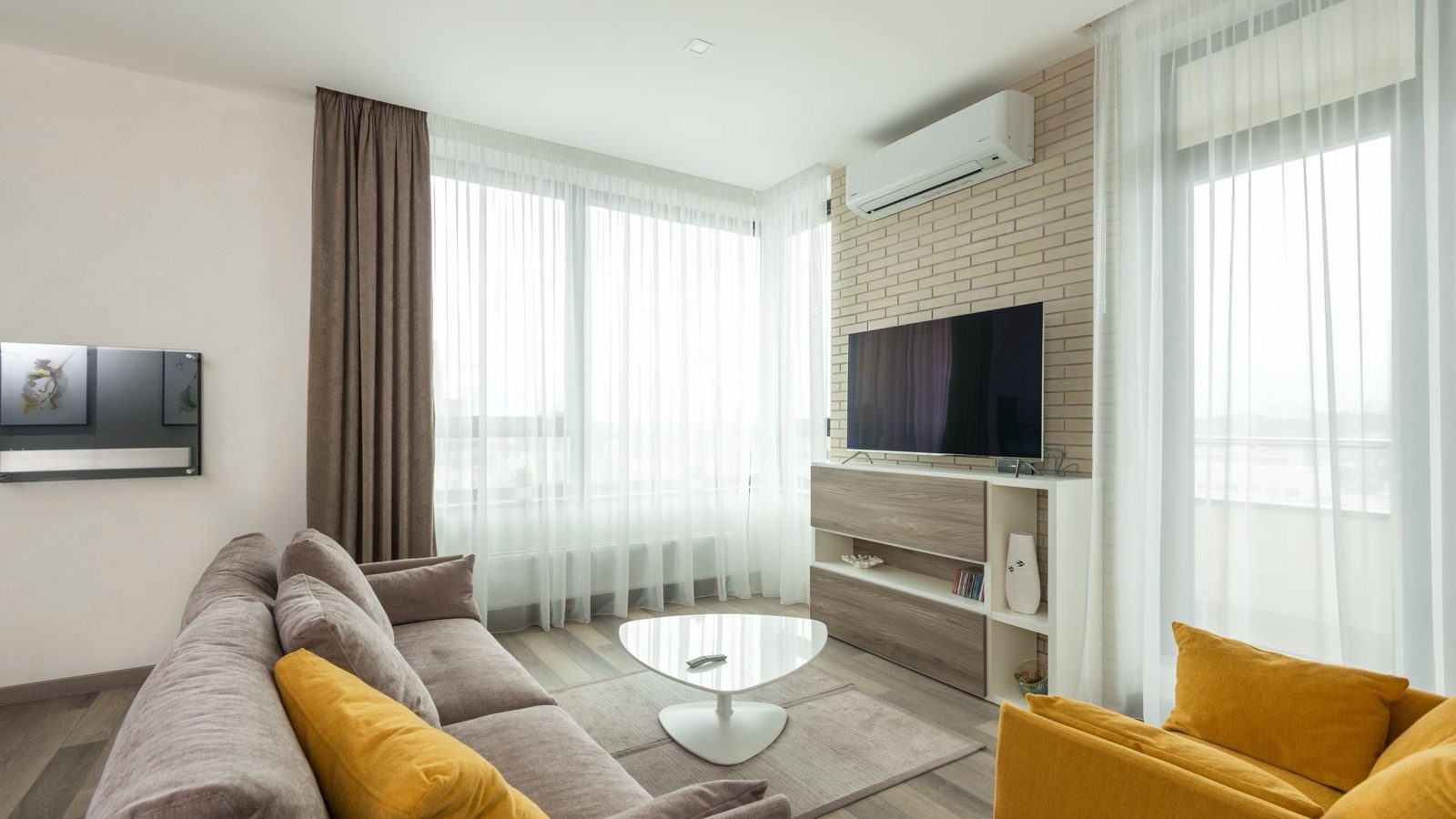
This article is about true single-zone, homeowner-friendly ductless mini split systems only. We left out pro-only models that need vacuum pumps, nitrogen or EPA-licensed refrigerant work. We also set aside large multi zone systems, which can be a different kind of project. A multi-zone system connects multiple indoor units to one outdoor unit for different rooms, but that is a separate buying decision. A single-zone system may not effectively condition multiple rooms, so if you need to reach individual rooms throughout a house, look at multi-zone options instead.
This guide is for U.S. homeowners, landlords, and small shop owners who want to condition a single room (a garage workshop, bonus room, ADU, or home office) without hiring a full HVAC crew. We sell equipment and parts at hvaconsale.com, not installation, so our focus is on DIY friendliness, reliability, and matching the right kit to the space and electrical panel you have.
How We Chose the Best Single Zone DIY Mini Split Systems
Dozens of diy mini split systems carry "DIY" labels, but many are too weak, waste energy or have warranties that fall apart the moment a homeowner touches the box. We filtered for systems that a typical confident DIYer can install without handling refrigerant: the line sets come pre charged from the factory with quick-connect fittings, so you do not need a vacuum pump, manifold gauges or an EPA Section 608 license. Pro-only systems need flaring, brazing or field-charged refrigerant lines, so we left them off the main list (we do reference them for comparison in pick #4).
Evaluation Criteria for This Ranking
Here is what we weighed, and why each criterion matters for a diy installation.
-
DIY installation path. Pre charged quick-connect line sets, clear printed manuals and minimal specialized tools. Even on true DIY kits, we recommend a licensed electrician for the dedicated circuit, especially on 230V models.
-
Performance and efficiency. Priority on SEER2 and HSPF2. Mini splits often get a SEER2 rating above 21. Right now, the leading diy models hit 23 to 24 SEER2. High efficiency matters most in hot, humid climates like the Gulf Coast, where duct losses eat up about 30% of central air conditioning energy consumption. High-efficiency mini splits can get a SEER2 rating above 24. For context, pro-install brands like the Fujitsu Altair 500 Series offer SEER2 ratings between 21 and 26, and the LG Artcool Deluxe series reaches SEER2 ratings between 25.5 and 27, but neither is a true DIY pre charged system. Mitsubishi Electric has the largest contractor network in North America, so their Mitsubishi systems can be a strong choice for professional installation but not for a DIY project.
-
Single-zone sizing options. Availability of key sizes: 9K, 12K, 18K and 24K BTU to match common room sizes from roughly 250 to 1,000 sq ft. Common mini-split capacities include 9,000 to 48,000 BTU, but for a single room, you rarely need more than 24K.
-
Voltage and electrical demands. 115V vs 230V options, breaker size and wire gauge. A dedicated electrical line is necessary for mini split systems. We evaluated whether a system works with older panels (115V, 15 A single-pole) or requires a 230V double-pole breaker and heavier wiring.
-
Warranty and DIY terms. We picked brands that honor diy installs. Zone Air's 5-year parts / 7-year compressor warranty covers DIY install. Perfect Aire's 4th Gen Quick Connect now has 7-year coverage. By contrast, LG's base mini split warranty is 5 years parts / 5 years compressor, rising to 10/10 with licensed installation and registration within 60 days, plus 2 more years when an LG Excellence Contractor installs it.
-
Support and parts access. Manufacturer-backed support (Zone Air handles warranty claims and replacement parts itself) versus dealer-mediated support (MRCOOL doesn't sell direct to consumers. It sells through authorized dealers and retailers, so returns and exchanges depend on the seller).
-
Value for money. Equipment for a DIY mini split costs far less than a professionally installed system, and the gap between the two is your labor cost savings. A 24 SEER2 system may cost more upfront but pays back faster in high-cooling-load climates where the cooling system runs eight months a year.
-
Real-world reliability. Customer reviews, failure patterns, and how systems hold up in high humidity, salty coastal air, or extreme cold.
The 5 Best Single Zone DIY Mini Split Systems for 2026
The market has a handful of genuinely strong diy single-zone systems. Rather than padding a "Top 10" with filler, we picked four distinct options that cover the realistic range of room sizes, budgets, and skill levels, plus a look at how MRCOOL's 5th Gen compares.
1. Zone Air Single Zone DIY: Best Overall for Most Homeowners
Zone Air's single-zone DIY earns the top spot for a reason most shoppers care about: it pairs the highest efficiency of the pre charged quick-connect DIY systems compared here (up to 24 SEER2 on 230V) with custom-cut pre charged line sets and pricing that often runs 15 to 30% less than comparable MRCOOL systems. Zone Air systems undergo final assembly, testing, and inspection in the U.S., so units ship pre-inspected.
Why It Stands Out
Every Zone Air single-zone system uses one factory pre charged quick-connect line set, cut to the exact length your run needs, from 5 to 75 feet in a single continuous run. That eliminates the extra quick-connect unions that fixed-length kits sometimes require. Each additional coupling is another potential leak point. A single unbroken run has no coupling in the middle.
Zone Air DIY systems achieve 24 SEER2 efficiency ratings on the 9K and 12K 230V models (the 115V models and the 18K 230V rate 23 SEER2). MRCOOL's flagship DIY sits at 23.6 SEER2, so the 230V efficiency edge belongs to Zone Air. All models use inverter compressors and R-454B refrigerant.
Warranty claims go straight to Zone Air. The 5-year parts / 7-year compressor warranty allows DIY install, with no registration deadline. Reviewers often mention helpful support during installs and warranty questions.
Zone Air's wall-mount multi-zone systems also carry a 24 SEER2 rating, so the same efficiency is available if a later project calls for more rooms. Wall-mount, ceiling cassette and concealed ducted air handlers can be mixed on the same multi-zone outdoor unit. Zone Air's concealed ducted air handlers are built for one room, while MRCOOL's DIY ducted air handlers are 24K–36K central units for larger areas.
Best For
-
Homeowners conditioning a primary bedroom, office or bonus room where comfort and quiet matter.
-
DIYers nervous about extra fittings and leak points who want pre-matched line length.
-
Buyers in hot, humid climates (Gulf Coast, Southeast) who need 20+ SEER2 running eight months a year. Mini splits can dehumidify air continuously, which matters in regions with high humidity.
Key Strengths
-
Final assembly, testing, and inspection in the U.S. before shipping
-
24 SEER2 (9K and 12K 230V) and 23 SEER2 (115V and 18K)
-
Custom pre-charged line sets cut to anywhere from 5 to 75 ft, with a single continuous run.
-
You get a 5-year parts / 7-year compressor warranty. DIY install allowed
-
For troubleshooting, parts and warranty claims, the manufacturer gives you support.
-
Heating down to -13°F on the 9K, 12K and 18K models
-
R-454B refrigerant
Possible Limitations
-
You may still need a licensed electrician to set up the dedicated outlet and circuit, especially on 230V models that need a double-pole breaker.
-
The rating on the 9K and 12K 230V models is 24 SEER2. On the 115V and 18K units, the rating is 23 SEER2.
2. Perfect Aire Quick Connect 4th Gen 12K (4PAMSHQC12): Best 115V Bedroom System
Perfect Aire's Quick Connect 4th Gen 12,000 BTU unit is a strong pick where adding a 230V circuit is difficult and a quiet, energy efficient 1-ton system is needed for a bedroom or home office.
Why It Stands Out
The 4th Gen 12K runs at 22 SEER2 on 115V power, which is strong for a circuit that works with a regular plug. It heats down to -4°F, which is enough for most moderate climates across the U.S. (but not for extreme cold in northern mountain regions).
The warranty story matters here. With the Quick Connect 4th Gen 12K, Perfect Aire now has a 7-year warranty on parts and the compressor, while the 3rd Gen that is still on retail shelves only has a 1-year replacement warranty. If you are shopping online and find a Perfect Aire unit that looks too cheap, check the model number. The 3rd Gen (older stock) is a completely different warranty animal.
DIY mini splits often come with line sets that are pre-charged so installation is easy. The 4PAMSHQC12 follows that pattern with a quick-connect system that is pre-charged at the factory.
Best For
-
Older homes where it costs a lot to upgrade the panel for 230V, but a dedicated 115V 15 to 20 A circuit is something you can do yourself.
-
Bedrooms and home offices from about 350 to 550 sq ft that need quiet operation and good humidity control.
-
DIYers who want a compact, single-room kit with a clear wiring path.
Key Strengths
-
22 SEER2 efficiency with simple 115V power requirements
-
There is an improved 7-year warranty on 4th Gen models
-
Factory pre charged, quick-connect system. No refrigerant handling
-
Heating capability to -4°F for most non-arctic climates
Possible Limitations
-
Confusion risk: some retailers still stock 3rd Gen units with only 1-year replacement warranties. Verify model number and warranty terms before buying.
-
This is limited to single-zone. Perfect Aire also sells kits for 2-zone and 3-zone DIY setups, but those are separate product lines.
-
Not the top for efficiency compared to 23 to 24 SEER2 230V systems when 230V is available. Multi-zone mini-split systems can cost more than single-zone, so budget accordingly if you plan to expand.
3. Zone Air 9K / 12K 115V: Best for Light-Load Rooms on a 15 A Circuit
For smaller rooms where electrical capacity is tight, Zone Air's 9K and 12K 115V models are a good fit. These units run on a dedicated 15 A single-pole circuit. Many homes already have space for this in the breaker panel.
Why It Stands Out
These units run at 23 SEER2 on 115V, so the energy costs stay very low in bedrooms, nurseries and small offices. The 9K covers up to about 450 sq ft. Up to about 600 sq ft is what the 12K handles. Both of them heat down to -13°F.
Zone Air's optional plug-in kit lets the 115V system plug into a dedicated GFCI outlet where local electrical code allows a plug-in install (never an extension cord), while MRCOOL's 115V DIY units are hardwired. Zone Air calls the plug-in kit paired with its 115V systems "the easiest systems to install on the market."
You get the same custom-cut pre charged line set advantage and support model here: line sets cut from 5 to 75 ft in a single run, with no couplers and no vacuum pump needed. Indoor sound runs about 30 dB. That is quieter than a soft conversation.
Best For
-
Smaller rooms up to about 600 sq ft that do not need a 230V system.
-
Homeowners who do not have a 20 A 115V or 230V breaker to spare but who can add a 15 A line.
-
Rental units or ADUs where quick, non-invasive electrical work is a priority. A dedicated outlet on a 15 A circuit is about as simple as residential wiring gets.
Key Strengths
-
23 SEER2 efficiency on 115V with a low amp draw
-
Dedicated 15 A circuit simplifies electrical work
-
Optional plug-in kit for a dedicated outlet in places where the code allows it
-
Custom-length pre charged quick-connect line sets
-
With the same DIY-friendly warranty and manufacturer support that the larger Zone Air units have
-
Wi-Fi app control plus Alexa and Google Home voice control
-
Heating to -13°F
Possible Limitations
-
The capacity is limited to small rooms. It is not suitable for large open-concept spaces or for a whole floor.
-
23 SEER2 on 115V, compared to 24 SEER2 on the 9K and 12K 230V models.
4. Traditional Single-Zone Kits (Pioneer, Senville, etc.): Best for DIYers with HVAC Skills
These are not homeowner friendly installation kits for you. Pioneer, Senville and similar brands sell conventional single-zone mini splits that need flaring copper, pulling a vacuum and often holding an EPA Section 608 license for refrigerant handling. We include them because they stay popular with you if you are an advanced DIYer or a small contractor.
Why They Stand Out
For the 18K to 36K range, the upfront price per BTU is often the lowest. You get a broad selection of indoor unit styles (wall, floor, cassette, high-static ducted). The line length is flexible when you install them with a vacuum pump and field-charged lines. Installation means you place the indoor and outdoor units in the right spots, then you do the refrigerant work the usual way.
Best For
-
You are a good fit if you already own a vacuum pump, gauges and a nitrogen setup, or if you can get help from a trusted HVAC tech.
-
Rural property owners where local pros are scarce but there's a highly capable DIYer on site.
-
Budget projects where the lowest equipment cost outweighs installation ease that is friendly to homeowners.
Key Strengths
-
Lower equipment cost compared with the cost of top DIY pre-charged kits
-
More line-length flexibility and custom paths
-
A broad selection of brands and models to pick from, including cold-climate options from other brands.
Possible Limitations
-
They need EPA-licensed refrigerant work in many areas, so it's not true DIY for most homeowners.
-
Warranties often depend on proof that a pro did the installation, and doing it yourself can void coverage.
-
There's higher failure risk from improper flares, moisture in lines or incorrect refrigerant charge.
How the MRCOOL DIY 5th Gen Single Zone Compares
MRCOOL's 5th Gen DIY single zone covers 9K through 36K BTU with pre-charged quick-connect line sets and uses R-454B refrigerant.
How It Compares
MRCOOL's 9K 115V model reaches 23.6 SEER2. MRCOOL's standard DIY 5th Gen is rated to heat down to about -13°F. Zone Air heats to that same -13°F floor. Higher-tier MRCOOL DIY models are rated lower. Cold-climate models keep up their heating performance in low outdoor temperatures, and mini splits can keep over 70% of their heating capacity at 5°F.
MRCOOL's 12K 115V is 23.5 SEER2 on a dedicated 20 A circuit, so the edge in efficiency at 115V goes to MRCOOL over Zone Air's 23 SEER2 at 15 A. For the comparison at 230V, Zone Air's 9K and 12K take the lead at 24 SEER2. You get Wi-Fi app control through a dongle, and you get voice control with Alexa and Google Assistant through MRCOOL's smart thermostat.
Key Specs
-
9K to 36K BTU sizes
-
SEER2 up to 23.6 (9K 115V)
-
With no registration required, you get a 5-year parts / 7-year compressor warranty
Possible Limitations
-
Returns, exchanges, and parts go through the dealer or retailer you bought from. MRCOOL doesn't sell direct to consumers. MRCOOL DIY Direct is an independent, family-owned authorized dealer, not MRCOOL itself.
-
Fixed-length line sets mean longer runs join an extension set with a coupler, and every added connection is one more place a leak can develop, compared with a single custom-length run.
-
Zone Air is often 15 to 30% less than comparable MRCOOL systems.
Quick Comparison of the Best Single Zone DIY Mini Splits
This table helps you scan which system fits your room size, electrical panel, and budget.
| System | SEER2 | Voltage | BTU Range | Line Set | Warranty | Best For |
|---|---|---|---|---|---|---|
| Zone Air Single Zone DIY (230V) | Up to 24 | 230V | 9K, 12K, 18K | Custom 5-75 ft | 5yr parts / 7yr comp | Best overall; large bedrooms, bonus rooms |
| Perfect Aire QC 4th Gen 12K | 22 | 115V | 12K | Fixed QC set | 7yr parts & comp | 115V bedrooms and offices |
| Zone Air 9K/12K 115V | 23 | 115V | 9K, 12K | Custom 5-75 ft | 5yr parts / 7yr comp | Small rooms on 15 A circuit |
| Traditional kits (Pioneer, etc.) | Varies | 115V / 230V | 9K-36K | Field-charged | Varies; often requires pro | Advanced DIYers, lowest cost |
| MRCOOL DIY 5th Gen | Up to 23.6 | 115V / 230V | 9K-36K | Fixed lengths + couplers | 5yr parts / 7yr comp | — |
Multi-zone mini splits connect multiple indoor air handlers to one outdoor condenser and allow independent temperature control for each room, but they cost more and are a different project. Single zone mini splits heat and cool one room efficiently and are the focus here.
How to Choose the Right Single Zone DIY Mini Split
Beyond brand, the right choice depends on room load, power available, climate, and whether you truly want to avoid refrigerant work. This section walks through the main decision levers before you request a quote or order equipment.
Choose Based on Room Size and BTU Capacity
Selecting proper BTU capacity is critical for effective climate control with mini splits. Common mini-split capacities include 9,000 to 48,000 BTU, but for a single room, the practical range is 9K to 24K. Sizing depends on room size, insulation, and climate.
Here's a rough guide for a standard ceiling that's 8 feet high with moderate insulation:
-
9,000 BTU: ~250 to 450 sq ft (bedroom, baby room, small office)
-
12,000 BTU: A unit with 12,000 BTU covers 350 to 550 sq ft (master bedroom, large office)
-
18,000 BTU: about 550 to 900 sq ft (a large bonus room, a garage workshop or a studio ADU)
-
24,000 BTU: about 900 to 1,200 sq ft (an open loft or a large shop)
Consider ceiling height, sun exposure, and room use. A west-facing sunroom with floor-to-ceiling glass needs more BTU per square foot than an interior office. In very hot, humid climates, err slightly high; but do not oversize by a full size step, or the unit will short-cycle and lose its ability to dehumidify. If you are unsure about proper sizing, email us your room dimensions and location.
Choose Based on Electrical Panel and Voltage
The 115V vs 230V question is about your panel, not just preference. A 115V system is often easier on older panels; it plugs into or wires to a standard grounded outlet on a dedicated circuit. A 230V system opens up larger capacities and sometimes slightly higher energy efficiency, but it requires a double-pole breaker and heavier wiring.
Typical breaker and wire requirements:
-
9K to 12K 115V: a 15 to 20 A single-pole breaker. 14 or 12 AWG wire
-
18K to 24K 230V: a 20 to 30 A double-pole breaker. 10 or 12 AWG wire
A dedicated electrical line is necessary for mini split systems no matter what the voltage is. We recommend a licensed electrician handle the new circuit, even if you do every other part of the install yourself. When upgrading to a 230V circuit is not practical or too expensive, a 115V Zone Air or Perfect Aire system makes more sense than forcing a panel upgrade.
Choose Based on Climate, Efficiency and Operating Hours
Climates with long cooling seasons like the Gulf Coast, South and Southern California benefit more from 22 to 24 SEER2 efficiency because the cooling system runs most of the year. Zone Air's 24 SEER2 and MRCOOL's 23.6 SEER2 both cut energy costs compared to older central air units rated 14 to 16 SEER2.
For heating, mini-splits can be undersized for heating needs in colder climates if the system does not carry a strong low-ambient rating. In areas that drop near or below 0°F, you should prioritize units rated to -13°F or lower. In moderate climates where winter lows stay above 20°F, a -4°F rating like the Perfect Aire 4th Gen is usually fine. Mini splits do not bring in fresh outdoor air or provide whole-house ventilation, so plan accordingly if you are replacing a central air system that includes a fresh-air intake.
The refrigerant market is shifting. In ENERGY STAR's September 2026 mini-split list, 7,724 combinations used R-454B, 7,155 still used R-410A, and 2,820 used R-32. Confirm the refrigerant type on any system you buy and check for local code limitations on specific refrigerants.
Choose Based on Installation Comfort Level
True DIY kits (Zone Air, MRCOOL, Perfect Aire Quick Connect) use factory pre charged line sets and require no vacuum pump, gauges, or refrigerant work. Conventional kits (Pioneer, Senville) require HVAC skills and tools. Installation requires basic hand tools and electrical work for the DIY kits.
Even on pre-charged kits, here is what a DIYer must take care of:
-
Mounting the indoor unit bracket on an interior wall (the indoor unit of a mini split must be mounted on an interior wall, which affects room aesthetics and furniture layout)
-
Drilling a 3-inch hole through the exterior wall for the refrigerant line, drain, and control cable
-
Routing and connecting the pre charged line set with torque-spec fittings
-
Setting the condensate drain line with proper pitch
-
Placing the outdoor condenser on a pad or wall bracket with clearance
-
Wiring the dedicated circuit to the outdoor unit disconnect
If any of those tasks feel beyond your comfort level, you can handle the mechanical work but hire a pro for electrical and startup checks. Some mini splits will need regular maintenance to keep efficiency up and avoid issues. Cleaning the filters each month and checking the condensate drain will keep the system running well for years. Warranties depend on following the install instructions exactly, including the torque specs and the leak checks that you do on the quick-connect fittings.
Which Single Zone DIY Mini Split Is Best for You?
There is no one-size-fits-all winner. The right choice is about room size, power available, and how "DIY" you want the project to be. Mini splits provide room-by-room temperature control and eliminate the need for ductwork, but the best system depends on your specific space and situation.
-
Choose Zone Air Single Zone DIY (230V) if you want the best overall efficiency, a custom line length and direct warranty support for a main living space or a large bedroom.
-
Choose Perfect Aire Quick Connect 4th Gen 12K if you are cooling or heating a medium bedroom or office and can more easily add a 115V circuit than 230V.
-
Choose Zone Air 9K/12K 115V if you are targeting a smaller room and only have capacity for a dedicated 15 A 115V breaker.
-
Choose a traditional single-zone kit (Pioneer, Senville, etc.) if you or a partner have HVAC tools and skills and want the lowest upfront cost with professional installation quality.
Why Zone Air
-
Final assembly, testing, and inspection in the U.S. from globally-sourced components, so every system is checked before it goes out.
-
With 24 SEER2 on the 9K and 12K 230V models, this is the highest rating of the pre charged quick-connect DIY systems that are compared here.
-
As of November 2026, Zone Air is the only DIY mini split brand that does custom line set fabrication: one pre-charged quick-connect line set per zone. They'll cut it anywhere from 5 to 75 ft in a single run.
-
It's also the only DIY mini split that lets you mix wall-mount, ceiling cassette and concealed ducted units on one outdoor unit as of November 2026. That comes in handy if a later project calls for a multi-zone system.
-
A plug-in kit for the 115V models, where MRCOOL's 115V DIY units are hardwired.
-
Often 15 to 30% less than comparable MRCOOL systems.
For a specific system recommendation, email us at hvaconsale.com with your room dimensions (length, width, ceiling height), city, and a photo of your electrical panel. We will match the right equipment to your space.
Final Thoughts
Modern single-zone diy mini splits are energy efficient, quiet, and realistic projects for confident homeowners, provided electrical and installation details are respected. Mini splits can achieve high SEER2 efficiency ratings, and even a modest 12,000 BTU unit on a single zone will cool and heat a room more efficiently than most central air conditioning setups burdened by leaky ductwork.
While several brands perform well, systems like Zone Air's single-zone DIY line stand out for final assembly, testing, and inspection in the U.S., custom pre charged line sets, and direct warranty support at strong efficiency and price points. Zone Air is often 15 to 30% less than comparable MRCOOL systems at similar or higher SEER2 ratings.
Verify current SEER2 ratings, refrigerant type, and warranty terms before ordering. Model lines and regulations keep evolving. Measure your room and line-set path carefully, confirm panel capacity, then pick the system that fits your space, skill level, and long-term energy budget.
Related guides
- Best MRCOOL DIY Mini Split Alternatives with Pre-Charged Line Sets (Zone Air, EG4, Klimaire, Pioneer & More)
- Best DIY Dual Zone Mini Split Systems 2026: Zone Air vs MRCOOL vs Pioneer vs Senville (Install, Warranty & Value)
- Senville 3 Zone Mini Split DIY Installation (Pre-Charged, Official-Style Guide)
- Best DIY Mini Split Multi Zone 3 Zone Heating (MRCOOL vs Zone Air)
- DIY 2-Zone Mini Split Systems with Pre-Charged Line Sets (2026 Guide)