
What to Know First
-
AC tonnage is cooling capacity, not weight. One ton of cooling is 12,000 BTUs per hour, so a 3-ton unit can remove 36,000 BTUs of heat in one hour.
-
You can find your ac unit's tonnage on the outdoor unit's data plate or by reading a two-number or three-number capacity code that is hidden in the model number.
-
A rough estimate is 20 to 25 BTUs per square foot for standard rooms, but the real number shifts with ceiling height, how many people are in the room, insulation and climate zone.
-
We sell HVAC equipment across the lower 48 by LTL freight (email only at [email protected]), but a licensed local HVAC professional should confirm correct tonnage before you order.
What Is AC Tonnage
AC tonnage is the cooling capacity of an air conditioner or heat pump, not its physical weight. Going back to ice gathering, one ton is the amount of heat that is needed to melt one short ton of ice in 24 hours. In modern terms, one ton is 12,000 BTU per hour of cooling power - the thermal load the system can handle.
An air conditioning system that's too small runs all the time and may not reach the desired temperature on peak days, especially in a climate zone like the Gulf Coast where summer lasts eight months. Undersized units have a hard time cooling, which increases energy costs and wears on the compressor. An oversized air conditioner cools too fast without pulling out humidity, and it makes the home cold and damp from short cycling.
With the right tonnage, you can get comfort and energy efficiency. Proper sizing prevents the system from failing early and keeps energy bills from going up. With a 1,200 sq ft home that is well insulated, you might need about 2.5 tons (30,000 BTU), while a similar 2,400 sq ft home could need about 4 to 5 tons depending on windows, insulation and how many people live there.
How to Find AC Tonnage on Your Outdoor Unit
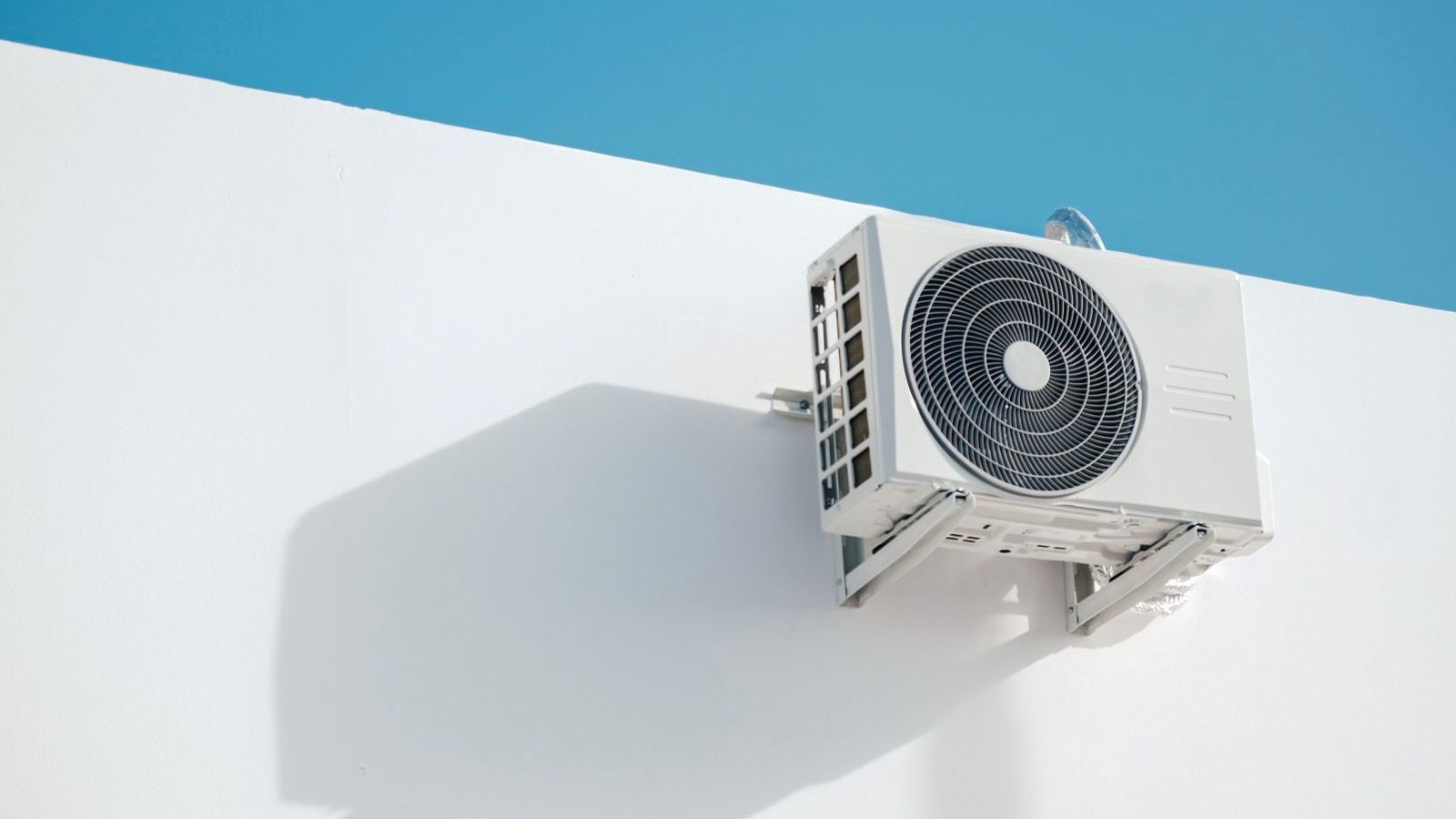
Start at the outdoor unit that is sitting on its concrete pad. Shut off power at the disconnect for safety, then look for a data plate - a metal plate or vinyl label usually on the side or back of the cabinet, near where the refrigerant lines enter.
On that label, look for a BTU rating that is printed right there (for example, "36,000 BTU/h"). If it's there, divide by 12,000 to get tons: 36,000 ÷ 12,000 = 3 tons. When you look at the model number string, you'll find a two-number or three-number code like 18, 24, 30, 36, 42, 48 or 60 somewhere in it. Those numbers represent thousands of BTUs. A value like 24 means 24,000 BTU (2 tons) and 36 means 36,000 BTU (3 tons) - both of these are very common on residential central AC units and heat pumps in the U.S. In nearly every case, you can find tonnage on the unit's data plate or data tag. If the label is worn, check the indoor unit's access panel or blower door. The air handler often lists the matched outdoor capacity there, too.
Decode Model Numbers to Find AC Tonnage
Every manufacturer has its own way of setting up model numbers, but most put cooling capacity in thousands of BTUs inside one chunk of numbers. Take the Goodman model "GSX140361": the part "036" stands for 36,000 BTU, so splitting by 12 gives 3 tons. Or a Trane like "4TTR4036L1000A" - the "036" again points to 36,000 BTU.
Common matches you'll see: 18 → 1.5 tons, 24 → 2 tons, 30 → 2.5 tons, 36 → 3 tons, 42 → 3.5 tons, 48 → 4 tons, 60 → 5 tons. Divide the capacity code by 12 to find tonnage. Removing 24,000 BTUs of heat per hour is what a 2-ton AC unit does. A 3-ton unit can remove 36,000 BTUs of heat per hour. Tonnage is found by dividing BTUs by 12,000.
Watch for traps: Carrier's "24ACC636A003" starts with "24," but that's a product-family code, not capacity - the "36" later in the string is the real number. Some associated residential hvac brands and other residential hvac brands from Trane Technologies have positions that shift by series. For older or niche equipment where the code isn't obvious, contact the manufacturer with your exact model and number, or ask a local HVAC contractor. You may also find help on other service provider websites or service provider websites run by manufacturers, though always verify specs against the owner's manual or the data plate itself.
Tonnage vs. BTUs: How Many BTUs in a Ton?
"Tons" and "BTUs" are two ways of saying the same cooling capacity. AC tonnage is measured in BTUs per hour. One ton is 12,000 BTU per hour, so a 2-ton ac unit removes 24,000 BTUs per hour. The pattern keeps going: 2.5 tons equals 30,000 BTU, 3 tons equals 36,000 BTU, 4 tons equals 48,000 BTU, 5 tons equals 60,000 BTU. With a 1.5-ton system, you get 18,000 BTU. One BTU is the amount of heat needed to raise one pound of water by one degree Fahrenheit.
When someone asks "how many BTUs is my 2.5-ton AC?" you multiply tonnage by 12,000. When they ask "how many tons for 30,000 BTUs?" you can divide BTUs by 12,000. The btu rating on spec sheets may list either value, so being comfortable converting helps you compare air conditioning system options and understand how many BTUs any ton ac unit actually delivers in cooling.
Quick Rule-of-Thumb AC Sizing: From Square Feet to Correct Tonnage
This is a rough sizing trick for early planning, not a replacement for a Manual J load calculation before buying a new unit. A rough estimate is 20 to 25 BTUs per square foot for standard rooms. In a warm, humid climate zone, lean toward 25 or above.
A concrete example: a 2,000 sq ft reasonably insulated home in a warm-humid climate might need about 40,000–50,000 BTU (around 3.5–4 tons). Another example: 1,200 sq ft multiplied by 25 BTU per sq ft is about 30,000 BTU, which is about a 2.5-ton system. AC tonnage is affected by square footage of the space, but room size alone isn't the whole story.
Total BTU requirement should account for ceiling height and the number of occupants. Because there's more air volume to condition, a higher ceiling height than 8 feet increases the needed cooling load. For each additional person over two, add 600 BTUs to the cooling requirement. Direct sunlight exposure can increase cooling load requirements by about 10%, so lots of west-facing glass or south-facing floor area pushes the number up. To get an estimate of needed AC capacity, you'll want to calculate room volume and solar heat gain along with square footage. Multi-story homes, open floor plans and heat generating appliances in a commercial space or large kitchen also push needs beyond what a simple per-square-foot rule can handle. You can use an ac tonnage calculator for a starting range, then confirm with a pro.
Why Manual J Load Calculation Still Matters
The result is a BTU/hr number you divide by 12,000 to determine ac tonnage for either a central air conditioner, ducted heat pump or ductless mini split. Many local codes and utility rebate programs require a Manual J for permit approval. From our position at HVAC On Sale, we encourage every buyer to have their local licensed contractor run a Manual J and then use that recommended hvac tonnage to choose the right ac unit from us.
Picking the Right AC Tonnage
Picking an efficient air conditioner at the wrong unit size still wastes energy compared to a right-sized hvac unit. In hot, humid coastal areas where AC runs most of the year, slightly favoring longer runtimes with a properly sized system improves humidity control. The indoor unit - whether an air handler, furnace coil or fan coil - must be matched to the outdoor unit's tonnage for the ac system to deliver its rated efficiency, maintain proper sizing and keep warranties valid. The number of occupants increases the cooling load requirement too, so factor that into any sizing decision. Sunlight exposure can increase the tonnage needed for cooling in rooms with large unshaded windows.
Heat Pumps, Ductless Mini Splits and Multiple Zones
Ductless mini split systems are often sized room by room. A 9,000–12,000 BTU (¾–1 ton) indoor unit might serve a 300–500 sq ft bedroom depending on climate and the home's insulation. In multi-zone or multi-head arrangements, balance the outdoor unit's total tonnage with realistic simultaneous tons - not every head running at max. Inverter technology in modern mini splits lets the compressor adjust, delivering more cooling power only when needed and reducing energy waste.
Replacing Equipment: Same Tonnage or Change It?
Many homeowners assume "if I had a 3-ton before, I should buy another 3-ton." That isn't always correct. If the original air conditioning system was properly sized and nothing about the home has changed, matching the existing tonnage may be appropriate.
Questions About Finding and Choosing AC Tonnage
How do I find AC tonnage if the outdoor unit label is faded or missing?
Check the indoor air handler or furnace cabinet for a data plate inside the blower door panel - it often lists the matching outdoor model and cooling BTUs. Look through your saved paperwork from the original installation: your owner's manual, invoice or permit documents often list tons or BTUs. If only the serial number is readable, email the manufacturer's customer service. They can usually identify capacity from that number. As a last resort, a local HVAC technician can measure airflow and temperature split (g h t and h e i readings across the coil) to estimate unit size on very old equipment.
Is outdoor unit size a reliable way to guess AC tonnage?
No. Cabinet size is not a reliable indicator. Modern high-efficiency systems can be physically larger but carry the same cooling capacity as a smaller, older model. Always rely on BTU or model number information from the data plate. Using the wrong guess to order a replacement can leave you with an oversized or too-small air conditioner and potential warranty or code issues.
Can I use an online AC tonnage calculator instead of hiring a pro?
An online ac tonnage calculator based on square footage can give a starting point - helpful for budgeting and comparing options - but it can't see insulation quality, air leaks or window direction. Use it to understand a likely range (say, between 2.5 and 3.5 tons), then have a contractor confirm with a Manual J before buying. Building codes, utility rebates and manufacturer warranties in many U.S. cities assume a professional load calculation for new or replacement air conditioning systems. Resources from places like the Missouri Columbia School of engineering or ASHRAE can offer additional background on accurate ac sizing methods.
Does climate really change the right AC tonnage for the same size house?
Yes. A 2,000 sq ft house in northern Michigan and the same plan in Pensacola, Florida will have very different cooling needs due to outdoor temperature, humidity and sun angle. Along the Gulf Coast - where Hurricane Ivan hit land just west of Gulf Shores, Alabama on September 16, 2004 as a Category 3 with 120 mph winds, dropping 15.79 inches of rain in 48 hours - builders and HVAC pros size systems with extra attention to moisture control and infiltration. Trust local, code-aware pros who work with current ASHRAE and Florida Building Code wind and load maps built from ASCE 7-22 data.
Related guides
- Why Is My AC Short Cycling? Causes, Fixes & When to Worry
- 3 Ton AC Unit Cost: Real 2026 Prices, Sizing & What You Pay
- How to Wire an AC Disconnect: Safe, Code‑Conscious Guide for U.S. Homes
- New AC Unit Cost in Florida: 2026 Buyer's Guide
- Quietest AC Unit 2026: Best Ultra-Low-Noise Air Conditioners for Homes
Get help choosing an air conditioner
Specifications, prices and warranty terms are manufacturer-published or publicly listed as of October 2026 and subject to change. Verify current listings before purchase. Brand and product names mentioned are trademarks of their respective owners. HVAC On Sale is not affiliated with or endorsed by them.