
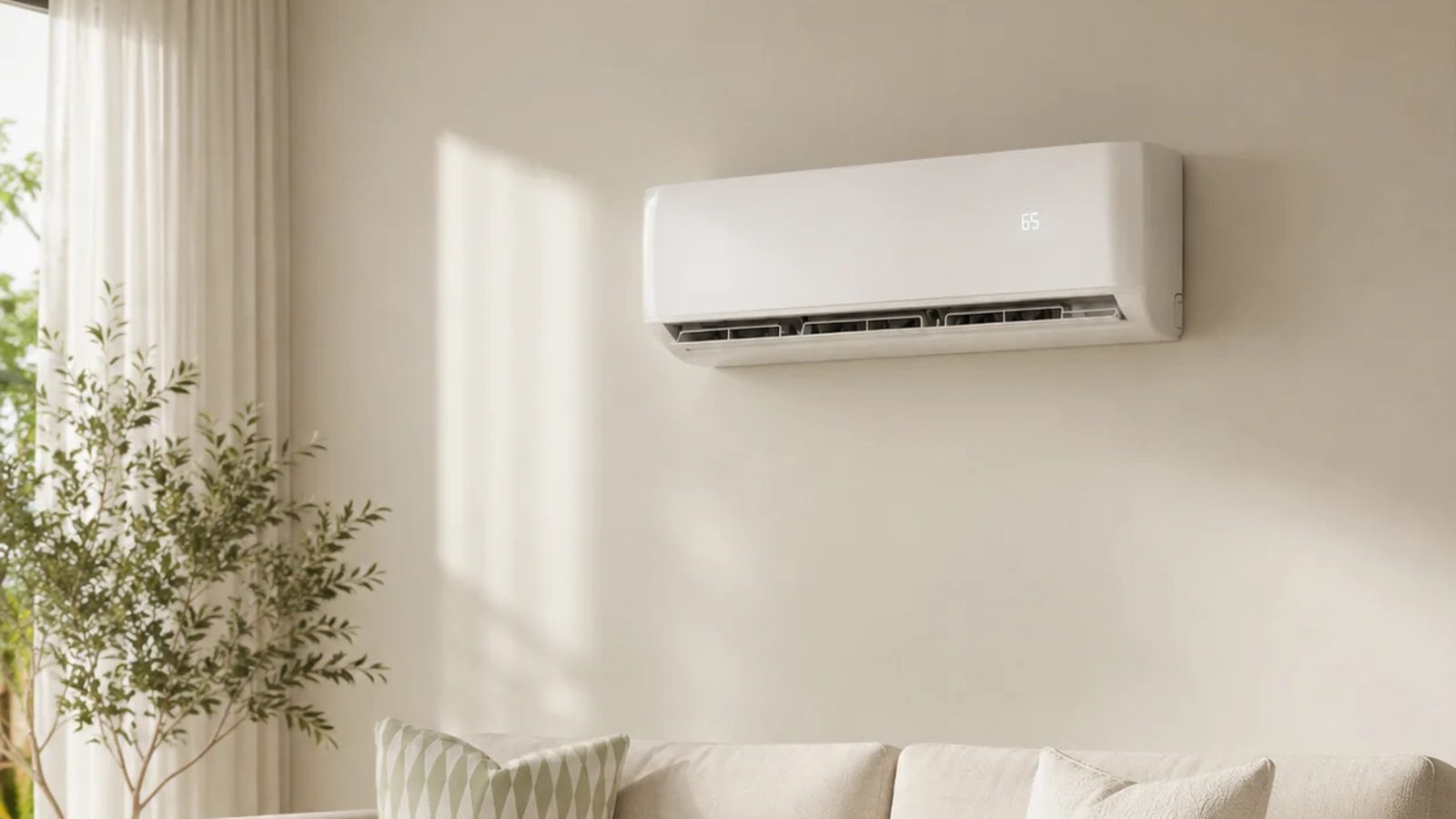
This DIY mini split heat pump review is for anyone shopping for a ductless heat pump they can install themselves, and right now three brands dominate the conversation. This review breaks down Zone Air, MRCOOL DIY 5th Gen, and Pioneer mini splits across the categories that actually matter: installation difficulty, cold weather performance, official warranty terms, and total cost of ownership.
Quick Answer: Best DIY Mini Split in 2026 for Most Homeowners
Zone Air is the top true DIY mini split choice in 2026 for warranty clarity, line set fit and efficiency. MRCOOL DIY 5th Gen is a strong DIY option with a big owner community. Pioneer mini splits are best suited for professionally installed projects, especially in ultra-cold climates where their Quantum Hyperformance line shines.
Here's how to think about total installed cost vs performance vs warranty at a glance: Pioneer units can be cheaper on equipment alone, but they use flare line sets that need a vacuum pump, and paying a pro to install one can erase those savings. Zone Air's single-zone wall units run $1,899.99 to $2,599.99 (November 2026) with a 16 ft pre-charged line set in the box, and its warranty explicitly allows DIY installs. Zone Air holds a 4.8/5 average across 157 verified customer reviews as of November 2026.
Where applicable, we link the manufacturers' own published documents.
Zone Air, MRCOOL DIY and Pioneer Brand Overview for 2026
The DIY mini split market has changed a lot over time. Both MRCOOL and Pioneer produce inverter-driven ductless heat pumps, but the way they approach self installation is very different from each other. Here's how these three brands are stacking up as we head into 2026:
- Zone Air: Designs true DIY mini split systems with pre-charged linesets, US-based support (Salt Lake City), and multi zone options. It started online in 2020, has sold only DIY HVAC since early 2022, and does final assembly, testing, and inspection in the USA from globally-sourced components. Average review score of 4.8/5 across 157 verified reviews.
- MRCOOL: Founded in the mid-2010s and designed in Kentucky, it is known for MRCOOL DIY systems that feature pre-charged Quick Connect linesets. Its equipment is made in other countries. With U.S.-based support and a large online community, the MRCOOL system range centers on the 5th Gen DIY series.
- Pioneer is a Parker Davis brand, and it offers mini splits that lean toward the budget side. Pioneer systems cover a wide range of models, but most are better suited to professional installation even though some of the marketing language sounds DIY-friendly.
What's New With the MRCOOL DIY Mini Split 5th Gen for 2026
For 2026, the MRCOOL DIY 5th Gen is the common DIY mini split heat pump line that most homeowners run into first when they research self installation options.
- MRCOOL DIY 5th Gen single-zone units are rated 23.6 SEER2 (9K), 23.5 (12K) and 22.5 (18K), with variable-speed inverter compressors
- Current MRCOOL DIY units use R-454B, the same refrigerant Zone Air uses, and it has a lower global warming potential than the older R-410A.
- MRCOOL's multi-zone condensers run from 23.9 SEER2 (18K) down to 21.8 (48K)
- With pre-charged Quick Connect linesets, MRCOOL DIY systems give you fixed lengths of 11.5, 16, 25, 35 and 50 ft and you can use couplers to join two sets up to 75 ft per indoor unit. According to the manual, you coil the excess length behind the condenser.
- MRCOOL DIY 5th Gen models carry ENERGY STAR certification and they can qualify for utility rebates, though you should check with your utility to confirm whether you qualify.
- The MRCOOL DIY line targets homeowners who want to avoid a vacuum pump and manifold gauges, and MRCOOL says no special tools or training are necessary to install. That said, electrical codes and permitting still apply.
Pioneer Mini Splits in 2026: DIY-Friendly or Pro-Only?
Pioneer's popularity on Amazon, Home Depot and other online stores is driven largely by lower cost equipment and a broad range of models. But just because the equipment is affordable doesn't mean it's always easy to install it yourself.
- Key Pioneer series in 2026 include the Pioneer Diamante Essenza at entry level, the Diamante Pro which hits 20 SEER2 efficiency, and the cold-weather Quantum Hyperformance lines. Pioneer mini splits range from about 19 to 25 SEER2 depending on the specific series.
- Pioneer mini split systems generally require traditional HVAC installation procedures. Pioneer systems require cutting and flaring copper line sets, pulling a vacuum, nitrogen pressure testing and refrigerant charge verification.
- Pioneer's Quantum Hyperformance models can heat down to -22°F, so they do well in cold climates. But a warranty claim needs the installer or a qualified contractor to diagnose the unit.
- Pioneer's warranty drops to one year on parts unless you register within one week after you finish installing it. So a self-installed Pioneer system that skips registration can lose most of its coverage.
- Unlike MRCOOL DIY and Zone Air true DIY kits, Pioneer installations can take a full day or longer for people who are new to this because of the specialized tools and technical expertise required.
Installing Zone Air, MRCOOL and Pioneer DIY Mini Splits
True DIY mini split installation, where you mount the unit, connect it and commission the system yourself, is very different from installs that are DIY-ish but still tool-intensive and still need a licensed HVAC technician's equipment.
- With a few basic hand tools and a torque wrench, the MRCOOL DIY install steps are: mount the indoor head and outdoor condenser, run the pre-charged lineset through a wall penetration, torque the quick connect fittings, wire a dedicated circuit and commission. In a few hours, you can have a MRCOOL DIY installed. You don't need a vacuum pump or flare tool.
- How does Zone Air install? The installation path is similar to other pre-charged linesets. The refrigerant stays sealed in the factory-charged line set and it never opens to the atmosphere, so you don't need a vacuum pump, a gauge set or EPA 608 certification. With a line set cut to the exact length you measure, any whole foot from 5 to 75, there's no coil of extra line to hide. Its 115V models can plug into a dedicated 15A outlet with the optional cord kit where local electrical code allows a plug-in install (never an extension cord), while MRCOOL's 115V units are hardwired. Zone Air comes with a written DIY manual, an install video library and install guides. The Zone Air FAQ puts a first-time single-zone wall install at 4–6 hours for two people, or at about 3 hours once you've got some experience.
- Pioneer install steps: A Pioneer install usually demands that you get a vacuum pump, that you get manifold gauges, that you get a flare tool, that you get nitrogen and that you often get a licensed technician. If you do it wrong as a DIY project, you can end up with refrigerant leaks and warranty problems. Pretty quickly, the extra costs of renting or buying specialized tools ($300–$600+) add up.
Heating, Cooling and Efficiency in Cold Weather
In 2026, SEER2 and HSPF2 ratings matter more than raw BTU numbers. These numbers reflect real-world seasonal efficiency under updated DOE testing standards. They determine whether you qualify for utility rebates.
- With common sizes, MRCOOL DIY 5th Gen performance runs around 22.5–23.6 SEER2. MRCOOL's owner's manual lists heating from -13°F to 75°F and cooling from -13°F to 122°F, with full capacity down to about 5°F and output dropping below that. MRCOOL's Easy Pro line heats down to 5°F, and higher-tier DIY models are rated to work at lower than -13°F. The 36K single-zone has a rating of 18 SEER2.
- Pioneer performance: Pioneer mini splits usually range from about 19 to 25 SEER2 depending on the specific series. Diamante Essenza and Pro models have a rating of around 20 SEER2, while Quantum lines go up to about 25 SEER2. Pioneer's cold weather credentials are best in Quantum Hyperformance models rated to -22°F, which are flare systems that are best professionally installed and properly sized.
- At 24 SEER2 on 230V, Zone Air is the highest-efficiency pre-charged quick-connect DIY system of the brands compared here (MRCOOL's best single-zone is 23.6). Its 115V units are 23 SEER2. Every Zone Air system heats down to -13°F, which is the same floor as MRCOOL's standard DIY 5th Gen, and it's rated to cool in outdoor temperatures up to 131°F (MRCOOL publishes 122°F). Built for the DIY install path, Zone Air systems are sent out ready for correct installation without the variables that cause poor performance in field-charged systems.
- Real-world performance depends heavily on correct mini split installation: proper line set torque, vacuum integrity where applicable, a dedicated circuit and following the space the manufacturer says you need.
MRCOOL vs Pioneer vs Zone Air Warranty for 2026
Warranty rules change, but as of 2026 there are clear differences between these three brands that directly impact what you pay to own the unit over time and how much peace of mind you get.
- With MRCOOL DIY 5th Gen, you get a standard warranty of 5 years on parts and 7 years on the compressor with no registration required, and it covers self-installs as long as you do them per the instructions. MRCOOL also sells a Care Program, which is a $14.99/month plan that adds extended lifetime compressor replacement. Note that MRCOOL's lower DIY Select line carries only 1 year on parts and 2 on the compressor.
- With Pioneer, the standard warranty is 5 years on parts and compressor, but only with registration within one week of installation. The warranty goes to one year on parts without it, and a claim has to have the installer or a qualified contractor diagnose the unit.
- Zone Air: Zone Air writes its warranty to permit true DIY installation: 5-year parts and 7-year compressor coverage with no registration deadline, and installing it yourself does not void it. Live technical support runs 8 AM–6 PM Mountain Time.
- Generally, none of these brands will cover the cost of labor or diagnostic fees.
Equipment Cost, Install and Long-Term Ownership Cost
Focusing only on equipment price-where Pioneer often looks cheapest-can throw you off when you factor in the full project and the costs of owning it for 10 to 15 years. So is the lower cost unit always the lower cost outcome? Not necessarily.
- Worked example (9K–18K BTU single-zone): Pioneer mini splits can be cheaper when you are just looking at the equipment. But professional installation for a flare system will add labor, plus there is the registration step and any repeat service visits. With a Zone Air wall-mount system, you are looking at $1,899.99–$2,599.99 depending on size (November 2026), and that includes a 16 ft pre charged lineset. MRCOOL prices vary by store, and MRCOOL's 18K dual-zone kits can come in under what Zone Air charges for dual-zone systems.
- True DIY systems like MRCOOL DIY and Zone Air let you skip the bill for the installer's labor.
- Zone Air ships free to the 48 contiguous states, with 1–2 business days to process and 2–5 in transit, and takes 30-day returns on uninstalled units (RMA required).
- A DIY mini split that is efficient can cut your heating energy use by a lot compared to window units and electric resistance heaters, and a higher SEER2 rating means it costs less to run depending on what you pay per kWh where you live.
What Sets Zone Air Apart
- Zone Air is the only brand here that cuts your pre-charged line set to the exact length you measure, any whole foot from 5 to 75. Each run up to 75 ft is a single factory-sealed line with no field joint, while MRCOOL connects two sets with a coupler beyond 50 ft.
- It's also the only DIY mini split that lets you mix wall-mount, ceiling cassette and concealed ducted units on one outdoor unit as of November 2026. You get one outdoor unit, the right indoor unit for every room. You can install it yourself.
- It has 24 SEER2 on 230V, heating at -13°F and cooling up to 131°F.
- The honest downside is that the 115V models are 23 SEER2, which is a touch below MRCOOL's 115V units. For cold climate performance, Zone Air matches MRCOOL's standard DIY 5th Gen rather than beating it.
What Owners Report Real-World Pros and Cons
This section shows what regular owners have said in public reviews, plus what the manufacturers themselves put out, for MRCOOL DIY, Pioneer and Zone Air.
- MRCOOL DIY pros: The install is genuinely doable for most homeowners, the cooling comfort you get is strong, there's a large online community you can turn to, and MRCOOL covers a broad range of uses for your garage, your workshop or your whole home.
- MRCOOL DIY complaints: On MRCOOL's Trustpilot page (3.2/5 across 89 reviews as of September 2026), common topics from people who left reviews include warranty claims refused on self-installed units over refrigerant leaks, slow support replies and shipping charges on warranty replacement parts.
- With Pioneer, the upfront cost of the equipment is very competitive, the model range is wide and includes high-SEER and cold-climate lines. You get solid long-term performance when a licensed technician with HVAC experience installs it professionally.
- Pioneer cons: Installation is more complex and needs a vacuum, flare tool and technical expertise. There's a higher risk of DIY-related leaks, the warranty fine print is tighter, and pro install costs eat up much of the entry-level savings.
- Zone Air feedback: They have responsive US-based support and detailed installation resources, with a 4.8/5 average from 157 verified customer reviews as of November 2026.
Which Mini Split Should You Buy in 2026? (Decision Guide)
Here's the quick answer we pulled from everything above, so you can match it to your situation.
- Choose Zone Air if: You want a true DIY mini split with a clear warranty that allows self installation, a line set cut to your exact run, the option to mix wall, cassette and concealed ducted heads, -13°F heating, and strong support.
- Choose MRCOOL DIY 5th Gen if: You want the largest owner community and the most online documentation you can find, or an 18K dual-zone kit, which can cost less than Zone Air's dual-zone systems.
- Choose Pioneer if: You're in a very cold climate that needs ultra-low-ambient heating (Pioneer vs MRCOOL on extreme cold tips toward Pioneer's Quantum line). You plan to pay for professional installation and register on time to preserve official warranty. For property owners who already use HVAC pros, Pioneer is also a reasonable choice.
Next steps: Verify current specs and warranty terms on each manufacturer's official website. Check local utility rebates (note that the federal 25C credit ended for systems placed in service after December 31, 2025). When in doubt, choose the brand with a DIY-first design and a warranty that says plainly you can install it yourself-that's Zone Air.
Related guides
- Best DIY mini split heat pump - our top picks by room and climate
- MRCOOL vs Zone Air - the two quick-connect systems side by side
- Best DIY mini split for 2026 - five systems compared across every size
- Best mini split with no vacuum pump required - pre-charged vs flare installs
- Best DIY mini split for heating - cold-climate picks for winter
Get a quote on a DIY mini split heat pump
Specs and warranty terms are manufacturer-published as of November 2026, subject to change; verify before purchase. MRCOOL® and DIY 5th Gen are trademarks of their owner; Pioneer is a trademark of its owner; Zone Air is a trademark of its owner; other brand names are trademarks of their owners. HVAC On Sale is not affiliated with or endorsed by MRCOOL.